 EN
EN


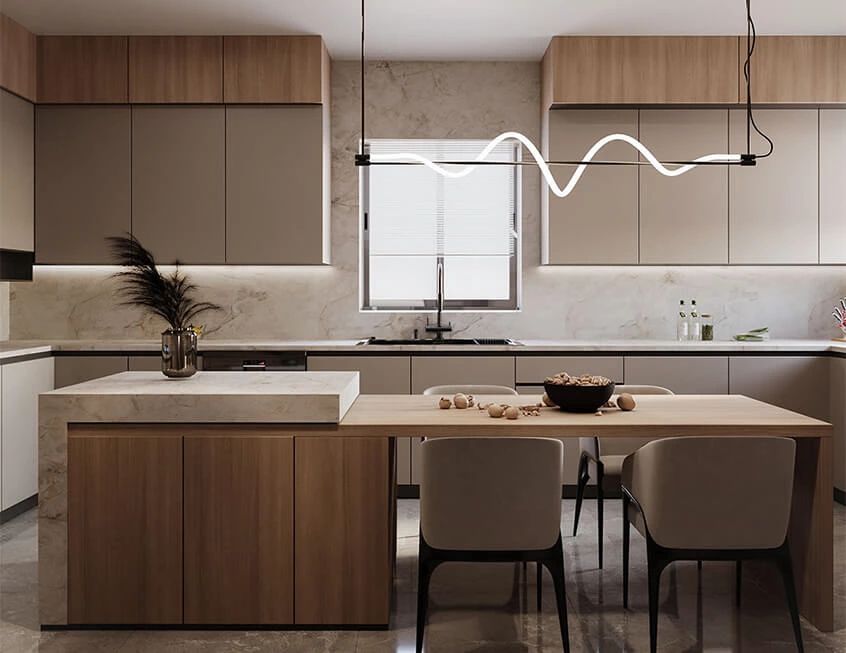
Why Surface Treatment Defines Quality in High Quality Cabinet Doors
The finish on a cabinet door is not merely decorative—it is the first line of defense against moisture, grease, scratches, and daily wear. For high quality cabinet doors, surface treatment directly determines both visual appeal and long-term durability. A premium finish locks out humidity, resists yellowing, and remains easy to clean—preserving the cabinet’s fresh look for years. In contrast, a poor finish can lead to delamination, discoloration, and premature replacement.
Perception & Performance: How Finish Impacts Durability, Cleanability, and Premium Appeal
A well-applied finish creates an immediate sense of quality—smooth to the touch, even in sheen, and free of brush marks or bubbles. This visual and tactile precision signals craftsmanship and attention to detail. Beyond aesthetics, the finish dictates real-world performance: kitchens expose doors to steam, heat, food splatter, and repeated wiping. A durable finish resists moisture penetration and remains intact when cleaned with standard household products. Stain-resistant surfaces enable quick, non-damaging wipe-downs—critical for hygiene and convenience. High-gloss and satin finishes, for instance, repel grease more effectively than textured or matte alternatives. Over time, UV-stable, heat-resistant coatings also prevent fading and yellowing, sustaining the cabinet’s premium appearance. It is this synergy of resilience and ease of maintenance that justifies the investment in high quality cabinet doors.
Key Metrics: Adhesion Strength, Scratch Resistance, and UV Stability for Long-Term Integrity
Three measurable properties separate a premium surface treatment from an average one. Adhesion strength reflects how tightly the coating bonds to the substrate—whether MDF, plywood, or solid wood. Weak adhesion invites chipping, peeling, and moisture wicking along edges. Scratch resistance ensures the surface withstands daily abrasion from utensils, jewelry, and appliance contact—keeping doors looking new longer. UV stability, enabled by integrated pigments and UV absorbers, prevents color shift and gloss loss under natural or artificial light. Manufacturers that rigorously test and guarantee these metrics deliver cabinets built to retain both beauty and function over decades.
Top Surface Treatments for High Quality Cabinet Doors
UV-Cured Acrylic: Gloss, Clarity, and Hardness on MDF and Plywood Substrates
UV-cured acrylic finishes deliver unmatched surface gloss, optical clarity, and hardness for high quality cabinet doors. This fast-curing technology provides exceptional scratch resistance and long-term UV stability—making it ideal for high-visibility kitchen applications. Its adaptability across engineered substrates like MDF and plywood ensures uniform consistency and dimensional stability. Optimized acrylic polymer formulations have enabled major manufacturers to achieve up to 25% higher hardness ratings compared to conventional acrylics—minimizing upkeep while preserving aesthetic integrity over time.
Thermofused Laminate (TFL) and High-Pressure Laminate (HPL): Texture, Consistency, and Anti-Fingerprint Innovation
TFL and HPL offer exceptional dimensional stability and broad design flexibility. TFL applies resin-saturated paper directly to the substrate via heat and pressure—achieving thickness tolerances under 0.004 inches for seamless edge-to-surface continuity. HPL delivers over 200 validated texture options, including realistic woodgrains certified by the Industrial Design Authority. Modern iterations feature nano-engineered anti-fingerprint coatings, reducing visible smudges by up to 90% in controlled lab testing. Both laminates maintain structural and visual integrity under prolonged exposure to heat and humidity—making them especially reliable for high-moisture environments.
Catalyzed Lacquer Finishes: Water-Based vs. Solvent-Based Tradeoffs in Production and Performance
Catalyzed lacquers represent a strategic balance between environmental responsibility and functional performance. Water-based variants meet stringent LEED requirements with near-zero VOC emissions—but demand precise humidity and temperature control during application to ensure film integrity. Solvent-based versions offer deeper color saturation and superior chemical resistance, as verified in McKittrick Lab testing (2023). Both types consistently achieve adhesion scores above 85 over 18 months when applied to properly prepared substrates. The selection ultimately hinges on production infrastructure, sustainability goals, and end-use performance priorities—not inherent superiority of one chemistry over the other.
Selecting the Right Treatment for Your High Quality Cabinet Doors
Choosing the best surface treatment requires aligning performance, aesthetics, and practical constraints. For high-moisture, high-heat kitchens, catalyzed lacquer or UV-cured acrylic provide proven adhesion and moisture resistance. Budget-conscious projects benefit from TFL, which delivers consistent color, anti-fingerprint functionality, and excellent value without compromising core durability. When premium gloss, clarity, and long-term UV stability are priorities—especially on MDF or plywood—UV-cured acrylic remains the benchmark. High-traffic areas favor scratch-resistant solutions like HPL or high-build catalyzed lacquers. Always match the finish to the substrate’s porosity, expansion profile, and intended use—and consult a cabinet specialist to validate your choice against real-world durability standards.
FAQ
Q: What role does surface treatment play in cabinet door durability?
A: Surface treatment acts as the first line of defense against moisture, grease, scratches, and daily wear, directly impacting the visual appeal and long-term performance of cabinet doors.
Q: What are the most important properties of a high-quality cabinet door finish?
A: Key properties include adhesion strength, scratch resistance, and UV stability, which ensure durability, resistance to wear, and long-term aesthetic appeal.
Q: What is the difference between TFL and HPL finishes?
A: TFL involves applying resin-saturated paper directly to the substrate for a seamless, cost-effective finish, while HPL offers more texture options and superior strength, making it ideal for high-traffic areas.
Q: Why is UV-cured acrylic highly recommended for high-quality cabinet doors?
A: UV-cured acrylic provides exceptional gloss, clarity, hardness, and UV stability, making it perfect for high-visibility and long-term durability in kitchen environments.
Q: Which finish should I select for a budget-conscious project?
A: TFL is an excellent choice for budget-conscious projects as it offers durability, anti-fingerprint functionality, and consistent aesthetics without compromising cost efficiency.