EN
EN


Choosing the right custom kitchen cabinet manufacturer is one of the most important decisions in any kitchen renovation, home improvement project, or residential development. Kitchen cabinets are not only storage furniture. They define the kitchen layout, cooking workflow, storage efficiency, interior style, and long-term value of the home.
A well-designed kitchen cabinet system can make daily cooking easier, keep the kitchen cleaner, and improve the overall living experience. A poorly made cabinet system, however, may lead to uneven gaps, weak structure, noisy drawers, swelling panels, difficult installation, and expensive rework.
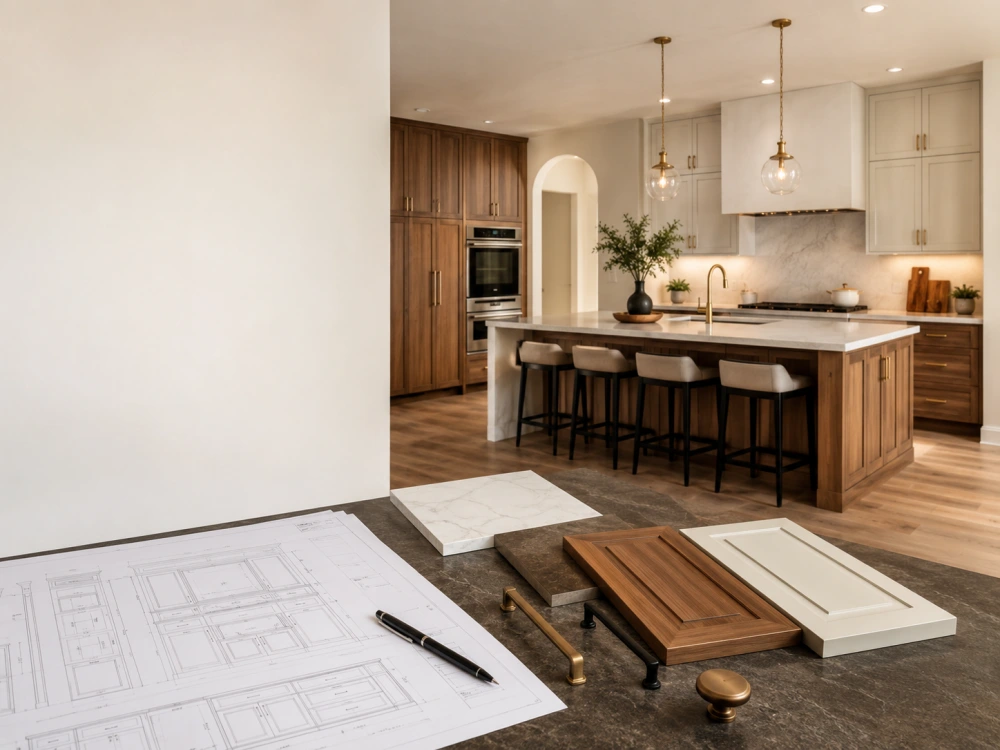 Choosing the right custom kitchen cabinet manufacturer helps improve design, storage, durability, and project delivery.
For homeowners, builders, contractors, interior designers, and developers, the right manufacturer should provide more than cabinet production. A reliable partner should support the full process, including design communication, material selection, shop drawings, custom manufacturing, quality inspection, packaging, delivery, and installation guidance.
This guide explains how to choose a custom kitchen cabinet manufacturer with confidence.
1. Why Choosing the Right Manufacturer Matters
Kitchen cabinets are used every day. They must handle cookware, food storage, cleaning products, moisture, heat, frequent opening and closing, and long-term daily wear. The right manufacturer helps you create a kitchen that is practical, beautiful, and durable. The wrong manufacturer may create problems that are difficult to fix after installation.
- Better space optimisation: Cabinets are designed around the exact kitchen size to reduce wasted corners and unused gaps.
- Improved storage efficiency: Drawers, pantry units, pull-out systems, and corner solutions make daily organisation easier.
- Cleaner kitchen aesthetics: Integrated appliances, matching finishes, and balanced proportions create a premium built-in look.
- Long-term durability: Stable boards, reliable hardware, and proper edge sealing support years of daily use.
- Smoother project delivery: Clear drawings, quality control, secure packaging, and installation support reduce costly mistakes.
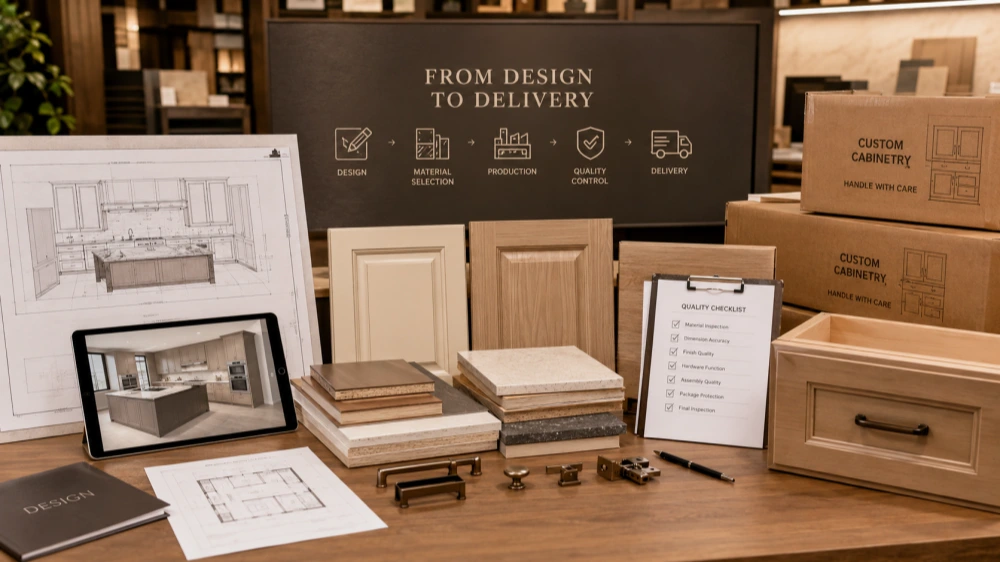 A reliable cabinet manufacturer supports the full process from design to production and delivery.
For project buyers, the manufacturer’s ability becomes even more important. Apartment projects, villas, hotels, and residential developments require consistent cabinet size, finish, packaging, and delivery schedule. A small mistake in one kitchen may be manageable, but the same mistake repeated across many units can create serious cost and timeline problems.
2. Who This Guide Is For
This article is useful for different types of buyers who need practical, durable, and well-designed kitchen cabinet solutions.
- Homeowners: Planning a kitchen renovation or new home kitchen project.
- Builders: Looking for a reliable kitchen cabinet supply for residential projects.
- Contractors: Needing stable production, packaging, and delivery support.
- Interior designers: Sourcing custom cabinetry for client projects.
- Developers: Working on apartments, villas, hotels, or serviced apartments.
- Overseas buyers: Comparing local and international custom kitchen cabinet manufacturers.
Whether you need one kitchen or a complete cabinet package for multiple homes, the selection process should be based on design capability, materials, hardware, manufacturing quality, delivery support, and after-sales service.
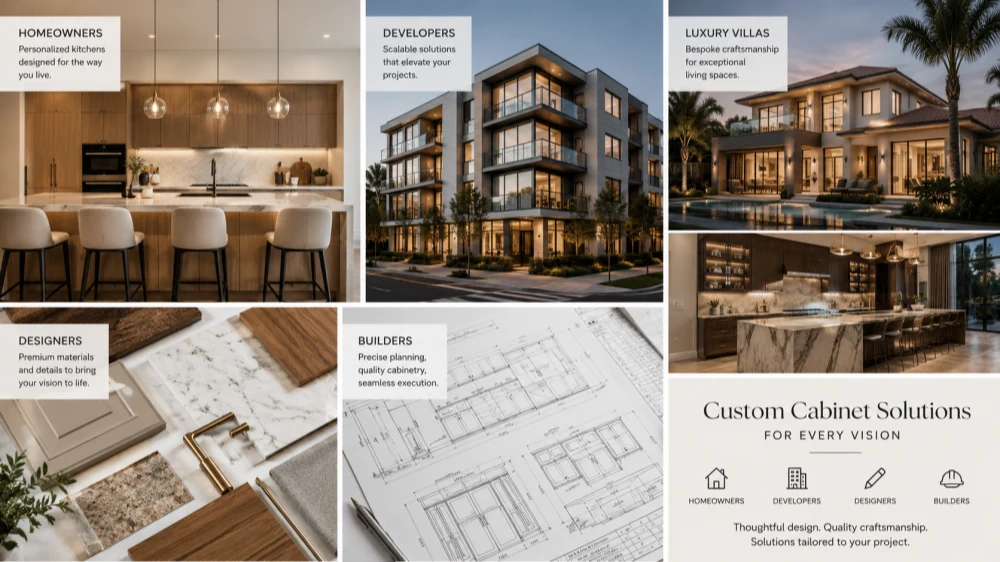 Different buyers need different cabinet solutions, from single homes to full residential projects.
3. Understand Your Kitchen Cabinet Needs First
Before contacting a manufacturer, you should understand your own project needs. Clear requirements help the manufacturer provide better recommendations, accurate quotations, and practical design suggestions.
3.1 Define Your Project Type
Different projects require different cabinet solutions. A single-family kitchen renovation is very different from a villa project or apartment development. For a single home, the focus may be lifestyle, storage, materials, and interior style. For a builder or developer, the focus may include production consistency, delivery schedule, packaging, installation efficiency, and cost control.
- Single home kitchen renovation
- Apartment kitchen cabinet project
- Villa kitchen cabinet project
- Residential development project
- Hotel or serviced apartment project
- Whole-house custom cabinetry project
A good custom kitchen cabinet manufacturer should understand your project type and recommend the right cabinet structure, material level, finish, packaging method, and installation solution.
3.2 Confirm Your Kitchen Layout
The kitchen layout directly affects cabinet design. Before requesting a quote, prepare the basic kitchen layout if possible. Each layout has different design priorities. For example, an island kitchen needs a good balance between cooking, preparation, seating, and storage. A small apartment kitchen needs stronger vertical storage and compact cabinet planning.
- L-shaped kitchen
- U-shaped kitchen
- Galley kitchen
- Island kitchen
- Open-plan kitchen
- Compact apartment kitchen
- Large villa kitchen
3.3 List Your Functional Requirements
Kitchen cabinets should be designed around real daily use. The more clearly you describe your daily habits, the better the cabinet design will be. A family that cooks often may need deep drawers, large pantry storage, and easy-access spice racks. A luxury villa project may need integrated appliances, hidden storage, premium finishes, and lighting systems.
- Pantry storage
- Deep drawers for pots and pans
- Tall appliance cabinets
- Pull-out baskets
- Corner cabinet solutions
- Hidden trash bins
- Under-sink storage
- LED lighting
- Handleless cabinet design
- Built-in refrigerator or oven cabinets
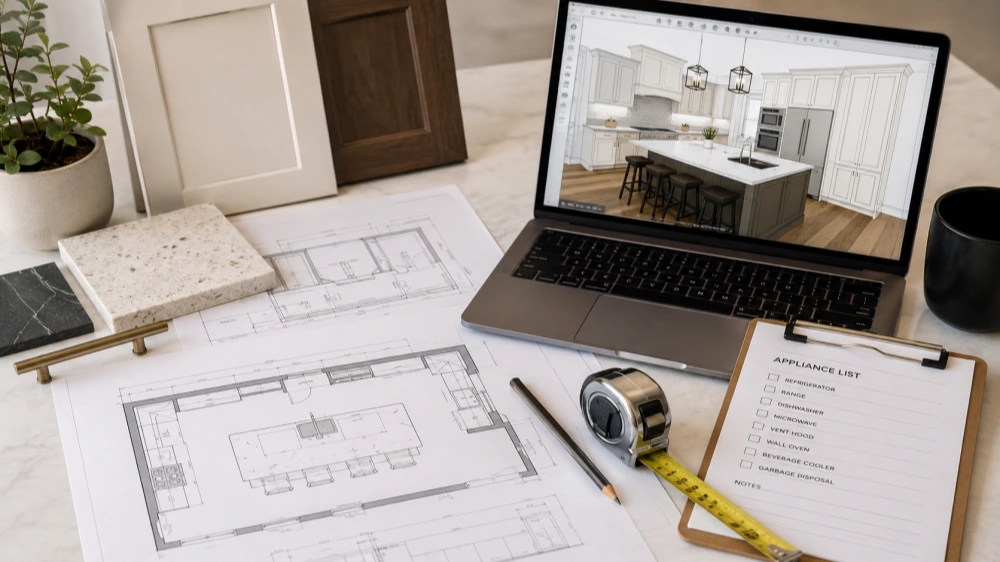 Clear kitchen layout planning helps the manufacturer create a more practical cabinet solution.
Before contacting a manufacturer, prepare your kitchen size, preferred style, appliance list, storage needs, and target budget. This makes communication faster and reduces unnecessary design changes later.
4. Check the Manufacturer’s Customization Capability
Customisation is the main reason to choose custom kitchen cabinets instead of standard cabinets. A strong manufacturer should not only offer different colours but also support flexible sizing, internal structure, door styles, finishes, and project-specific solutions.
4.1 Custom Sizing
A true custom kitchen cabinet manufacturer should not be limited to standard cabinet dimensions. The cabinets should be designed according to the actual kitchen space.
- Wall-to-wall cabinet fit
- Floor-to-ceiling storage
- Custom island size
- Special corner cabinet size
- Cabinets for irregular walls
- Built-in appliance openings
- Tall pantry cabinet dimensions
- Custom drawer width and depth
Custom sizing helps eliminate wasted gaps and creates a cleaner built-in appearance. This is especially important for luxury kitchens, villas, apartments with unusual layouts, and renovation projects where wall dimensions may not be perfectly standard.
4.2 Internal Storage Design
The inside of the cabinet is just as important as the outside. Beautiful cabinet doors may create a premium first impression, but internal storage determines whether the kitchen is easy to use every day.
- Adjustable shelves
- Drawer dividers
- Pull-out pantry systems
- Corner carousel baskets
- Bottle racks
- Cutlery trays
- Hidden storage
- Vertical tray storage
- Deep pot drawers
- Pull-out spice racks
Good internal design helps users find items faster and keeps the kitchen organised. Instead of large empty cabinet boxes, a custom manufacturer should help divide the space according to cookware, utensils, food storage, cleaning supplies, and appliances.
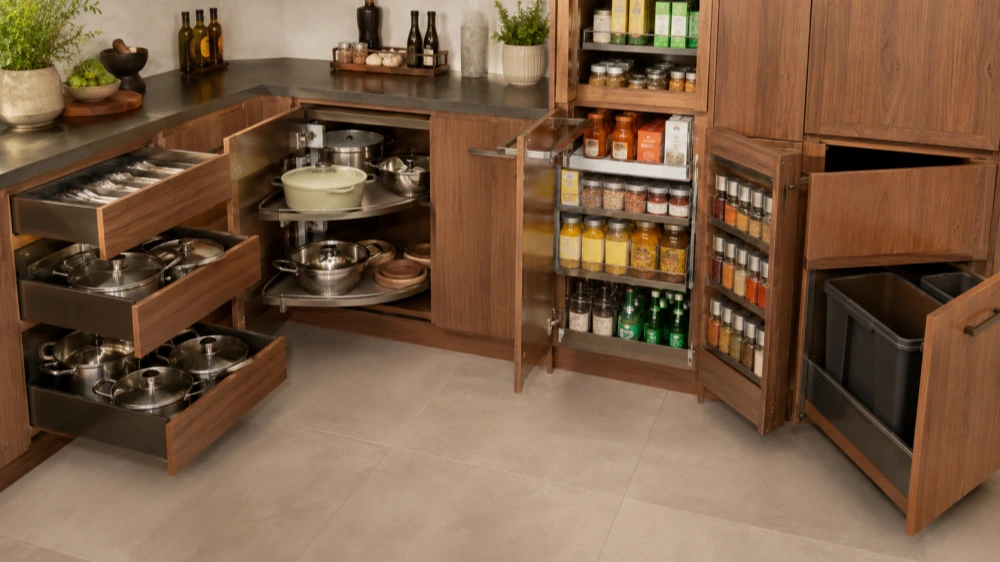 Smart internal storage turns cabinet space into a more efficient daily-use system.
4.3 Style and Finish Flexibility
Kitchen cabinets strongly influence the style of the whole home. The manufacturer should offer enough finish options to match different design directions, from minimalist apartments to luxury villas.
- Matte finish
- Gloss finish
- Wood grain finish
- Lacquer finish
- Laminate finish
- Textured finish
- Shaker doors
- Flat panel doors
- Slab doors
- Glass doors
- Handleless doors
For modern homes, matte and wood grain finishes are popular because they create a clean and warm appearance. For luxury kitchens, lacquer, veneer, glass doors, and stone-like surfaces can create a more refined look. A good manufacturer should help you choose finishes based on kitchen style, lighting, maintenance needs, and overall interior design.
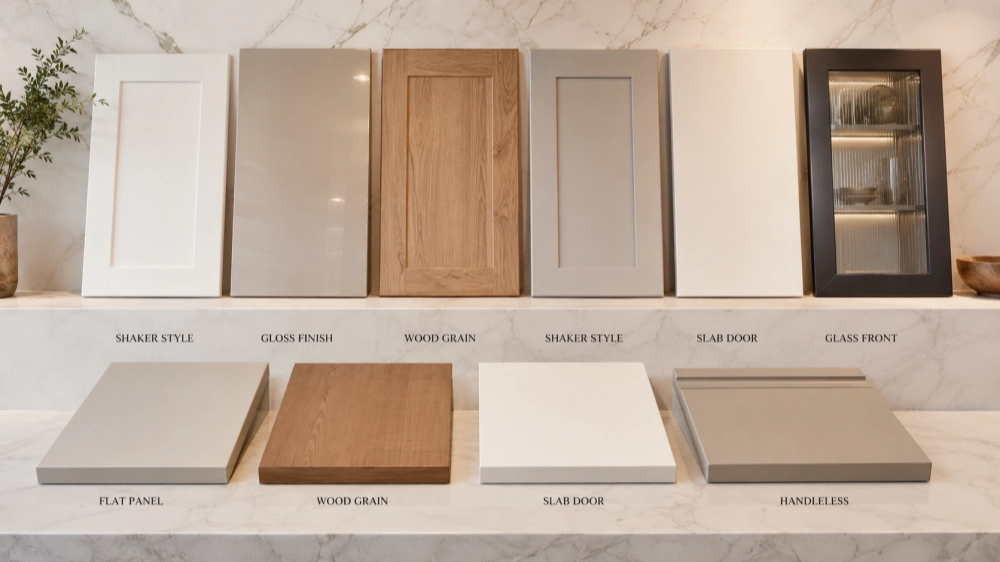 Flexible door styles and finishes help the kitchen match the whole home interior.
5. Review Material Quality
Material quality determines cabinet strength, durability, safety, and long-term appearance. When comparing manufacturers, never look only at the cabinet colour. You should ask what materials are used inside the cabinet structure, door panels, edge sealing, and surfaces.
5.1 Cabinet Carcass Materials
The cabinet carcass is the main structure of the cabinet. It supports the doors, drawers, countertop, appliances, and stored items.
- Plywood: Valued for strength, screw-holding ability, and structural stability.
- MDF: Smooth surface for painted, lacquered, or decorative cabinet doors.
- Particle board: Cost-effective option for standard cabinet systems.
- Moisture-resistant board: Useful in kitchen areas exposed to steam, water, and humidity.
- Solid wood: Suitable for selected premium applications and natural-style designs.
The cabinet carcass affects strength, moisture resistance, screw holding, and long-term durability. A reliable manufacturer should clearly explain material options and recommend the right choice based on your project budget and usage needs.
5.2 Door Panel Materials
Cabinet doors are the most visible part of the kitchen. They affect both style and maintenance.
- MDF painted doors
- Melamine doors
- Laminate doors
- Solid wood doors
- Veneer doors
- PET or acrylic surface options
- Lacquered cabinet doors
MDF painted doors are suitable for smooth, elegant surfaces. Laminate and melamine doors are practical, easy to clean, and suitable for modern daily-use kitchens. Veneer and solid wood create a warmer, natural look. PET and acrylic surfaces can provide a sleek, contemporary appearance.
5.3 Environmental Standards
For residential kitchens, material safety should be considered together with durability. Indoor furniture may affect air quality, especially in enclosed spaces.
- E0 board
- E1 board
- Low-formaldehyde materials
- Eco-friendly panel options
- Material test reports, if required
E0 and E1 board options help create a safer indoor environment for modern homes. This is especially important for families, apartments, villas, and projects where buyers care about long-term living comfort.
5.4 Surface Durability
Kitchen cabinets face daily cleaning, cooking oil, moisture, stains, and frequent contact. Surface durability is critical.
- Scratch resistance
- Moisture resistance
- Stain resistance
- Easy cleaning
- Heat and steam exposure protection
- Edge sealing quality
- Color stability
- Fingerprint resistance
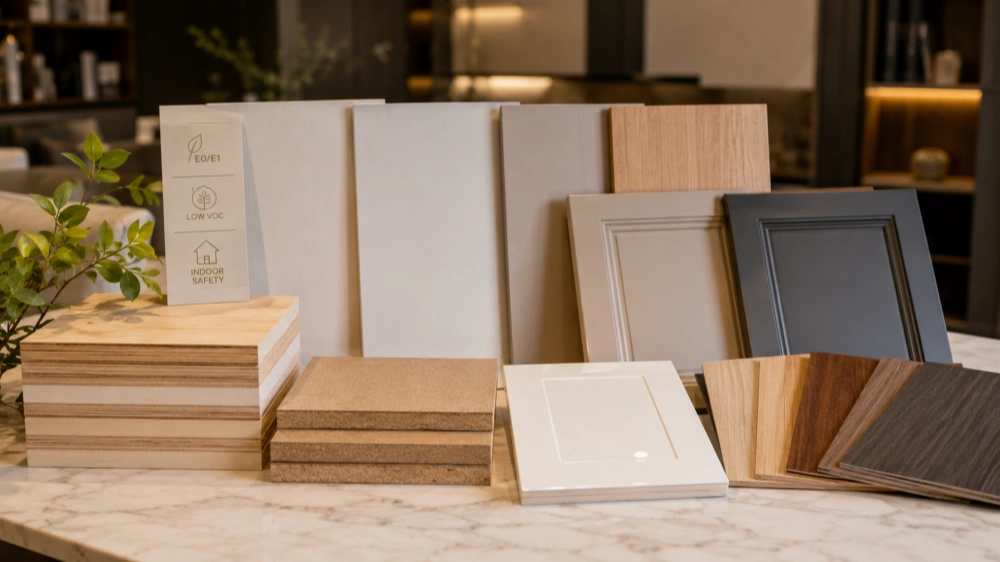 Material quality affects cabinet durability, indoor safety, and long-term appearance.
Edge sealing is especially important. Poor edge sealing may allow moisture to enter the board, causing swelling or deformation over time. Durable surfaces help keep the kitchen looking clean and premium after years of daily use.
6. Compare Hardware Systems
Hardware is often overlooked, but it has a major impact on the daily experience of kitchen cabinets. Good hardware makes cabinets quieter, smoother, and more durable. Poor hardware can make even expensive cabinets feel cheap.
6.1 Hinges
Cabinet hinges affect door movement, alignment, and long-term stability. Quality hinges keep cabinet doors aligned, quiet, and stable after years of use. They also allow small adjustments after installation, which helps maintain clean gaps between doors.
- Soft-close hinges
- Adjustable hinges
- Corrosion-resistant hinges
- Branded hardware options
- Strong load-bearing performance
6.2 Drawer Systems
Drawers are used frequently in modern kitchens. They store cookware, utensils, plates, food items, and cleaning tools.
- Soft-close drawer slides
- Full-extension runners
- Heavy-duty drawer systems
- Metal drawer boxes
- Hidden drawer runners
- Double-wall drawer systems
Full-extension runners allow users to access the back of the drawer easily. Heavy-duty drawer systems are useful for storing pots, pans, dishes, and pantry items. Soft-close systems improve comfort and reduce impact.
6.3 Functional Accessories
Functional accessories turn cabinet space into practical storage instead of simple empty boxes.
- Pull-out baskets
- Corner storage systems
- Tall pantry units
- Lift-up door mechanisms
- Waste bin systems
- Dish racks
- Spice racks
- LED sensor lighting
- Cutlery trays
- Bottle racks
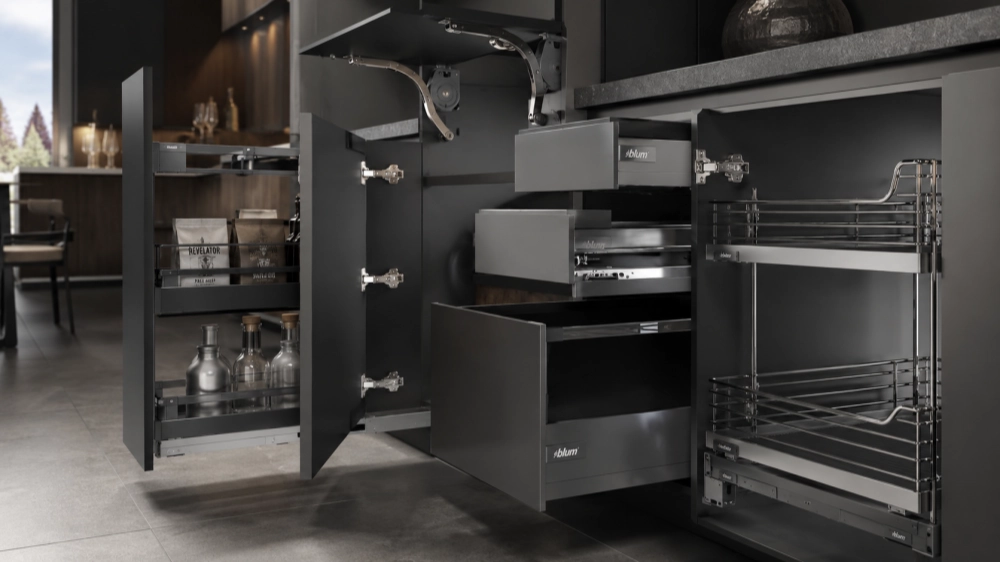 Quality hardware improves drawer movement, door alignment, storage efficiency, and long-term durability.
A professional custom kitchen cabinet manufacturer should help recommend accessories based on the user’s cooking habits and space conditions. Functional accessories improve daily convenience and make the kitchen feel more organised.
7. Evaluate Design and Drawing Support
Design support is a key difference between a basic cabinet supplier and a professional custom kitchen cabinet manufacturer. Good design is not only about appearance. It also includes workflow, storage, appliance placement, lighting, dimensions, and installation details.
7.1 Design Consultation
A professional manufacturer should understand both aesthetics and practical use. For example, the sink, cooktop, refrigerator, and preparation area should be arranged for smooth daily use. Pantry storage should be close to food preparation areas. Deep drawers should be placed where cookware is used most often.
- Kitchen workflow
- Storage planning
- Appliance placement
- Countertop coordination
- Lighting integration
- Door style selection
- Color matching
- Cabinet height and depth
- User habits and family needs
7.2 2D and 3D Drawings
Clear drawings help buyers understand the final result before production starts. 2D drawings show the cabinet dimensions, positions, and structure. 3D renderings help homeowners and designers visualise the final kitchen style. Production drawings guide factory manufacturing, while installation drawings help on-site workers install cabinets correctly.
- Layout drawings
- Elevation drawings
- Cabinet structure drawings
- 3D renderings
- Production drawings
- Installation drawings
7.3 Shop Drawing Confirmation
Shop drawings are especially important for builders, contractors, and project buyers. A reliable manufacturer should not begin production before drawings are confirmed. This step protects both the buyer and the supplier by reducing misunderstandings and rework.
- Cabinet dimensions
- Door opening directions
- Appliance openings
- Sink position
- Plumbing and electrical space
- Wall cabinet height
- Installation gaps
- Panel thickness
- Toe kick height
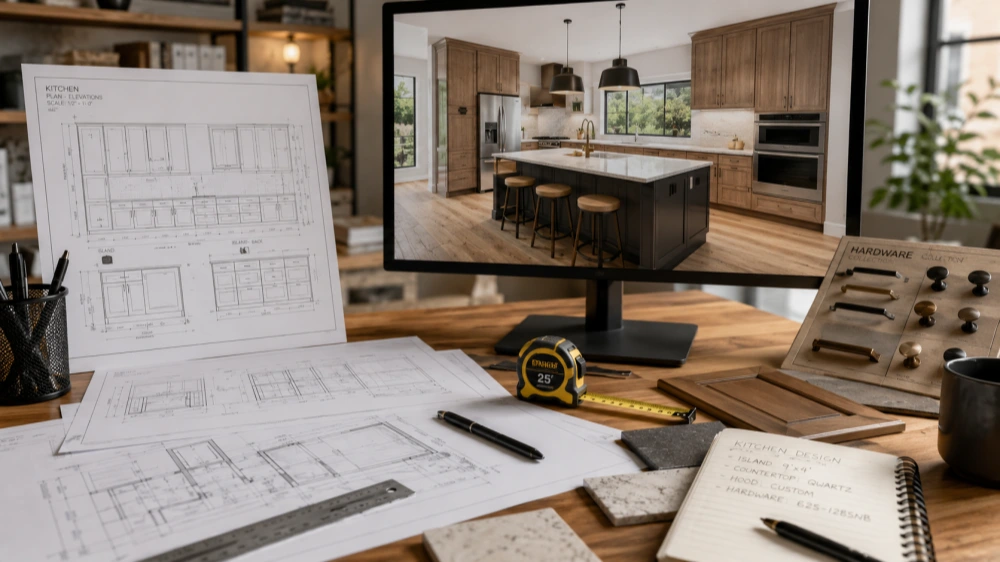 Clear drawings reduce production mistakes and help clients confirm the final kitchen before manufacturing.
8. Check Manufacturing Capacity and Quality Control
A custom kitchen cabinet manufacturer must have a stable production capability. This is especially important for project orders where consistency and delivery time matter.
8.1 Factory Capability
Factory capability affects cutting accuracy, edge quality, drilling precision, and final cabinet fit.
- CNC cutting
- Edge banding
- Drilling accuracy
- Panel processing
- Door production
- Trial assembly
- Batch production ability
- Surface finishing
- Packaging preparation
CNC cutting helps ensure accurate dimensions. Edge banding protects panel edges and improves appearance. Accurate drilling ensures hinges, drawer slides, and connectors fit correctly.
8.2 Quality Inspection
Quality control should happen before shipment, not after problems appear on site.
- Board thickness
- Edge sealing
- Surface scratches
- Color consistency
- Hardware fitting
- Door alignment
- Drawer movement
- Cabinet dimensions
- Packaging protection
- Label accuracy
8.3 Consistency for Project Orders
For apartment projects, villa developments, hotel kitchens, and multi-unit residential projects, consistency is critical. If each unit looks slightly different, the final project quality will suffer.
- Consistent cabinet dimensions
- Consistent door color
- Consistent surface texture
- Consistent hardware level
- Consistent packaging labels
- Consistent installation logic
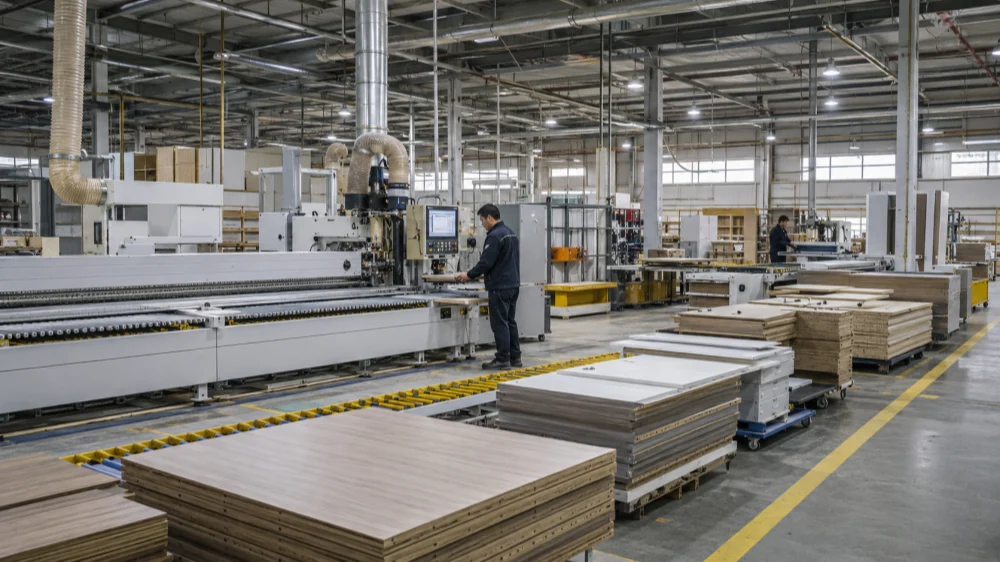 Stable production capacity ensures accurate cabinet dimensions and consistent project quality.
9. Ask About Packaging, Delivery, and Export Support
Packaging and delivery are often ignored during the early discussion, but they are essential for protecting cabinets and keeping the project on schedule.
9.1 Packaging Method
Kitchen cabinets may be delivered flat-packed or pre-assembled. The right method depends on shipping distance, installation labour, project timeline, and site conditions.
- Flat-pack packaging
- Pre-assembled packaging
- Corner protection
- Foam protection
- Carton packaging
- Wooden crate packaging
- Labelling by room or unit
Good packaging reduces damage during transport and makes installation easier. For project orders, clear labels are very important. Cabinets should be marked by room, unit, cabinet number, or installation sequence.
9.2 Delivery Coordination
Delivery planning should match the project schedule. For builders and contractors, late cabinet delivery can delay other trades, such as countertop installation, plumbing, electrical work, and final handover.
- Production timeline
- Shipping schedule
- Container loading
- Project delivery planning
- Site delivery requirements
- Storage conditions
- Delivery sequence
- Replacement part plan
9.3 Export Experience
For international buyers, export experience is extremely important. Export experience helps overseas projects avoid delays, confusion, damage, and unnecessary rework.
- Export documentation
- Container loading
- Product labeling
- Installation drawings
- Hardware packing
- Replacement part support
- Protective packaging
- Communication with freight forwarders
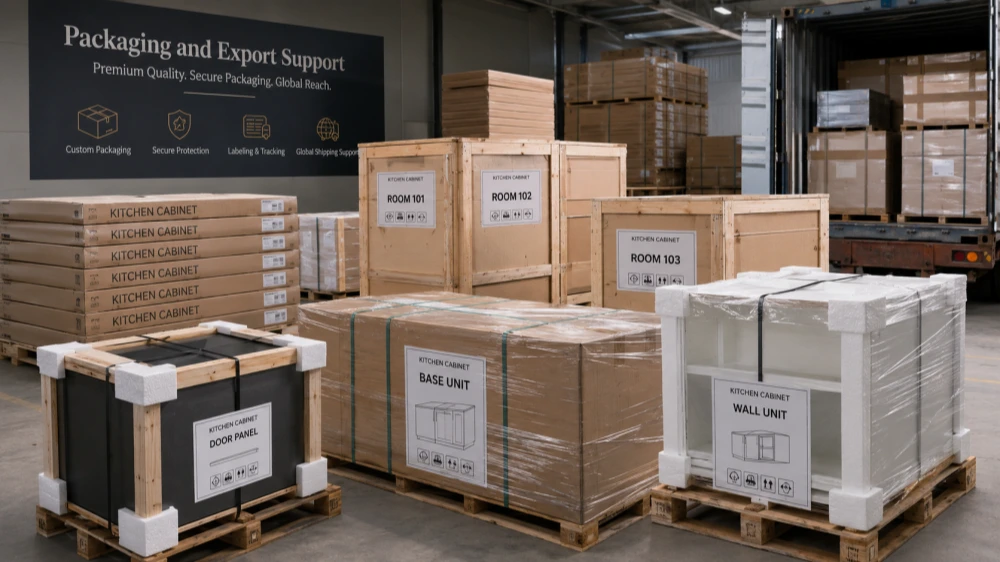 Secure packaging and clear labelling reduce transport damage and make installation more efficient.
10. Confirm Installation Support
Installation quality determines the final appearance of the kitchen. Even well-made cabinets can look poor if they are installed incorrectly.
10.1 Local Installation vs Installation Guidance
Different manufacturers provide different levels of installation support. For local projects, full installation service may be available. For international projects, the manufacturer may provide installation drawings and remote guidance, while local contractors handle the actual installation.
- Local installation service
- Installation through partner teams
- Remote installation guidance
- Detailed installation drawings
- Video support
- Numbered cabinet systems for easier assembly
10.2 What Installation Documents Should Include
Good installation documents should be clear enough for contractors to follow on-site.
- Cabinet layout plan
- Numbered cabinet list
- Wall cabinet position
- Base cabinet sequence
- Hardware installation notes
- Panel connection details
- Adjustment instructions
- Filler panel positions
- Toe kick installation
- Appliance opening details
10.3 Why Installation Quality Matters
Poor installation can cause uneven gaps, misaligned doors, loose panels, countertop problems, appliance fitting issues, difficult drawer movement, and poor final appearance. Professional installation support ensures that cabinets look built-in, clean, and premium.
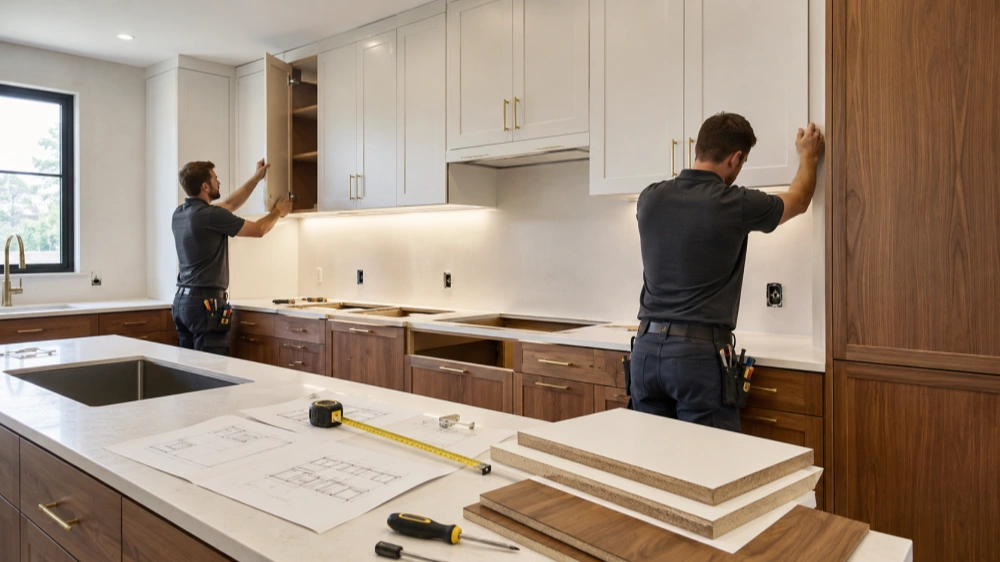 Professional installation support helps the finished kitchen look clean, aligned, and built-in.
11. Compare Warranty and After-Sales Service
Kitchen cabinets are a long-term investment. Warranty and after-sales support show whether the manufacturer is confident in its product quality.
11.1 Cabinet Structure Warranty
A clear warranty policy helps protect buyers if problems appear after delivery or installation. It also shows that the manufacturer has a more professional service process.
- Board structure
- Cabinet frame
- Door panel condition
- Edge sealing
- Installation-related issues
- Surface defects
- Manufacturing defects
11.2 Hardware Warranty
Hardware is one of the most frequently used parts of a kitchen cabinet system. If the manufacturer uses branded hardware, ask whether the hardware comes with separate warranty terms.
- Hinges
- Drawer runners
- Lift-up systems
- Pull-out baskets
- Functional accessories
- Handles
- Soft-close mechanisms
11.3 After-Sales Response
Before placing an order, ask how after-sales problems are handled.
- How are damaged panels handled?
- Can replacement parts be provided?
- How long does after-sales support take?
- Are spare hardware parts included?
- Is there a clear warranty policy?
- Who is responsible for shipping replacement parts?
- How are installation issues handled?
Reliable after-sales support protects the long-term value of your kitchen cabinet investment. A supplier that responds quickly and clearly is usually safer to work with.
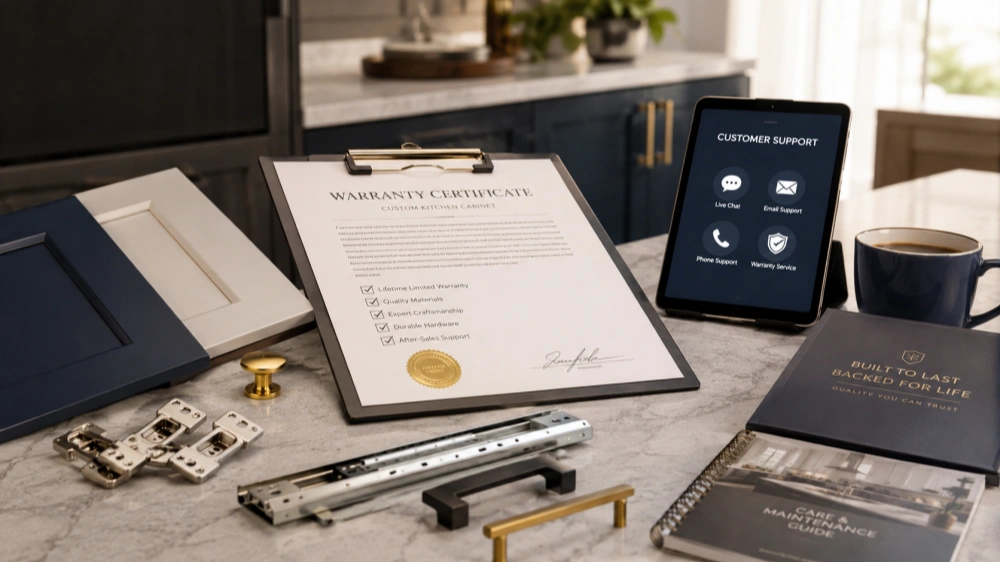 Clear warranty and after-sales support protect the long-term value of your kitchen cabinet investment.
12. Compare Price, But Do Not Choose Only by Low Cost
Price is important, but the cheapest kitchen cabinet option is not always the best value. A low price may hide weaker materials, poor hardware, thin boards, simple packaging, or limited support.
12.1 What Affects Kitchen Cabinet Price
Many factors affect the final price of custom kitchen cabinets. Two quotes may look similar at first, but they may include very different materials and hardware.
- Cabinet size
- Material type
- Door finish
- Hardware brand
- Internal accessories
- Countertop selection
- Packaging method
- Installation service
- Shipping cost
- Project quantity
- Design complexity
- Environmental material grade
12.2 Why the Cheapest Option May Cost More Later
A very low price may create higher costs later. Kitchen cabinets are used for many years, and saving a small amount at the beginning may not be worth it if the cabinets fail, look poor, or require expensive repairs later.
- Weak boards may deform.
- Poor edge sealing may cause swelling.
- Low-quality hardware may fail early.
- Inaccurate production may increase installation costs.
- Poor packaging may cause shipping damage.
- No clear drawings may lead to rework.
- Poor after-sales support may delay replacement.
12.3 How to Compare Quotes Correctly
When comparing cabinet quotations, make sure you are comparing the same specifications.
- Same material
- Same board thickness
- Same hardware level
- Same finish
- Same accessories
- Same packaging method
- Same installation scope
- Same warranty terms
- Same delivery conditions
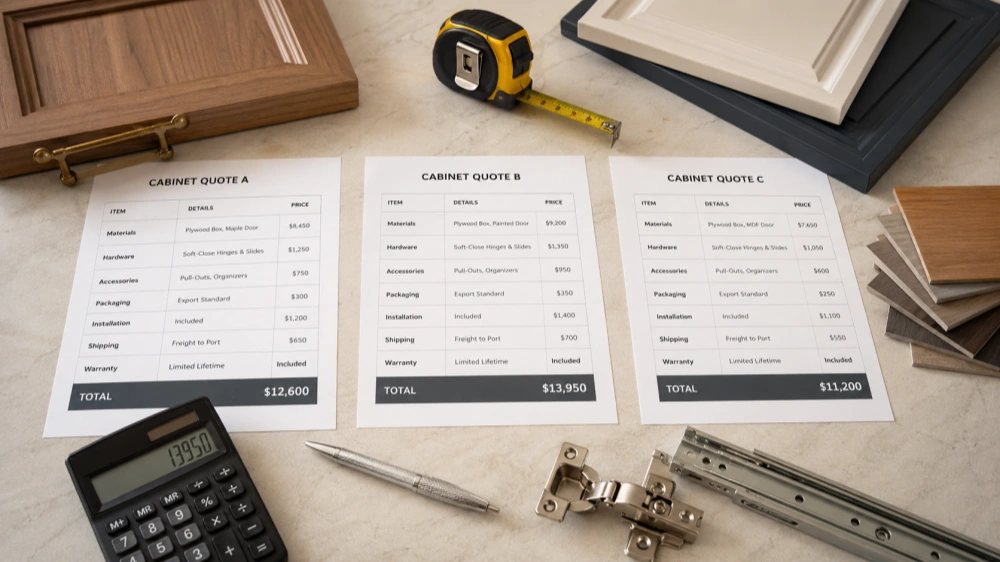 Compare cabinet quotes by material, hardware, finish, packaging, installation scope, and warranty terms.
A clear quote comparison helps buyers choose better long-term value instead of simply choosing the lowest upfront price.
13. Red Flags to Avoid When Choosing a Manufacturer
A reliable custom kitchen cabinet manufacturer should make the process transparent. If a supplier cannot explain materials, drawings, hardware, packaging, or warranty clearly, buyers should be cautious.
- No clear material specification
- No shop drawings before production
- No hardware details
- No sample confirmation
- No production timeline
- No warranty terms
- Very low price without explanation
- Poor communication
- No project photos or factory information
- No packaging or shipping plan
- Unclear responsibility for installation problems
- Refusal to confirm details in writing
- Vague answers about materials or structure
Good suppliers provide clear information because they understand that cabinet projects require accuracy. Poor suppliers often avoid details because they do not have a stable process. Before making a final decision, review the manufacturer’s communication quality, technical knowledge, quotation clarity, and willingness to provide samples or drawings.
14. Why Work with Allure Kitchen Cabinet
Allure Kitchen Cabinet provides custom kitchen cabinet solutions for modern homes, apartments, villas, and residential projects. Our focus is not only on cabinet production but also on practical design, durable materials, efficient storage, and smooth project delivery.
14.1 Custom Kitchen Cabinet Solutions
We support custom kitchen cabinets for different layouts and project types, including modern home kitchens, apartment kitchens, villa kitchens, open-plan kitchens, island kitchens, compact kitchens, residential project kitchens, and whole-house cabinetry projects.
Our custom cabinet solutions help clients improve kitchen storage, workflow, and interior appearance. Whether you need a minimalist kitchen, luxury kitchen, space-saving kitchen, or project-based cabinet supply, we can support flexible sizing and design communication.
14.2 Material and Finish Options
We offer flexible material and finish options based on project needs, including plywood and MDF options, matte finishes, gloss finishes, wood grain finishes, textured finishes, E0 / E1 environmental material options, durable surfaces for daily kitchen use, custom cabinet colours, and different cabinet door styles.
14.3 Project Support
For homeowners, builders, contractors, and design companies, Allure Kitchen Cabinet can support the full cabinet project process, including design communication, shop drawing support, custom production, quality inspection, secure packaging, export support, installation guidance, and whole-house cabinetry coordination.
For larger projects, we can help coordinate kitchen cabinets, wardrobes, bathroom vanities, laundry cabinets, TV cabinets, and storage systems to create a consistent interior style across the whole home.
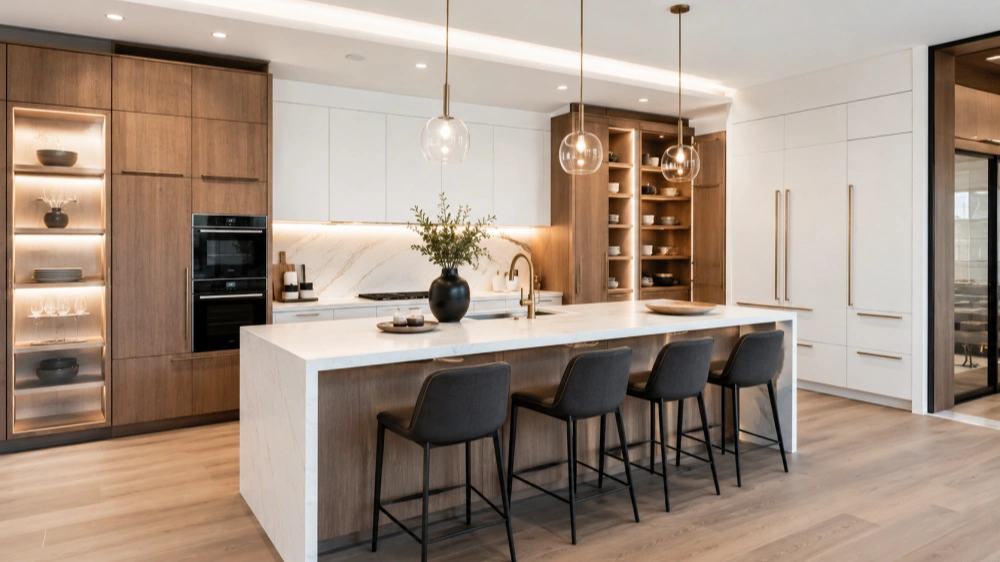 Allure Kitchen Cabinet supports custom kitchen cabinet solutions for homes, apartments, villas, and residential projects.
Get a Custom Kitchen Cabinet Quote
Send us your kitchen layout, preferred style, material requirements, and project details. Allure Kitchen Cabinet can help you create a tailored cabinet solution with practical storage, durable materials, and a clean, modern design.
Send Your Kitchen Layout15. FAQ About Choosing a Custom Kitchen Cabinet Manufacturer
Q1: What should I look for in a custom kitchen cabinet manufacturer?
You should look for design capability, material quality, customisation flexibility, hardware options, manufacturing accuracy, packaging, installation support, and warranty service. A reliable manufacturer should provide clear drawings, detailed material specifications, and professional communication before production begins.
Q2: What materials are best for custom kitchen cabinets?
Common materials include plywood, MDF, moisture-resistant board, laminate panels, melamine panels, lacquered doors, and veneer options. The best choice depends on your budget, kitchen style, durability needs, environmental requirements, and project type. For long-term residential use, stable boards, good edge sealing, and moisture-resistant surfaces are especially important.
Q3: How long does it take to manufacture custom kitchen cabinets?
The timeline depends on kitchen size, design complexity, material selection, production schedule, packaging, shipping, and installation requirements. A simple single kitchen may require less time, while full custom or project-based orders need more time for design confirmation, production planning, quality inspection, and delivery coordination.
Q4: Can a kitchen cabinet manufacturer provide design drawings?
Yes. A professional manufacturer should provide layout drawings, cabinet elevations, production drawings, and installation drawings. Some manufacturers can also provide 3D renderings to help clients visualise the final kitchen design before production.
Q5: Why is hardware important for kitchen cabinets?
Hardware affects daily use, noise control, drawer smoothness, door alignment, and long-term durability. Soft-close hinges, full-extension drawer runners, lift-up systems, and pull-out storage accessories can make the kitchen more comfortable and efficient.
Q6: Should I choose flat-pack or pre-assembled kitchen cabinets?
Flat-pack cabinets are easier to ship and may reduce transportation costs. They are suitable for projects with reliable local installation teams. Pre-assembled cabinets can save installation time and reduce assembly work on site, but they usually require more shipping space. The right option depends on project location, labour cost, shipping method, and installation requirements.
Conclusion
Choosing a custom kitchen cabinet manufacturer is about much more than comparing prices. A reliable manufacturer should help you create a kitchen that is practical, durable, beautiful, and easy to use every day.
Before making a decision, evaluate the manufacturer’s design capability, material quality, hardware systems, production accuracy, packaging method, installation support, and after-sales service. For project buyers, also consider production consistency, delivery reliability, export experience, and installation documentation.
The best kitchen cabinet manufacturer is not always the cheapest one. It is the one that can understand your project, provide clear solutions, control quality, and support the cabinet project from design to delivery.
Need a Reliable Custom Kitchen Cabinet Manufacturer?
Send your kitchen layout, preferred style, and project requirements to Allure Kitchen Cabinet. Our team can help you create a tailored cabinet solution with practical storage, durable materials, and a clean, modern design.
Get Free Design Support