EN
EN


Custom kitchen cabinets are one of the most important investments in a modern kitchen project. They affect storage, cooking workflow, cleaning efficiency, visual style, appliance integration, and long-term home value.
Unlike standard ready-made cabinets, custom kitchen cabinet costs can vary widely. The final price depends on kitchen size, cabinet layout, material choice, door finish, hardware quality, internal storage accessories, countertop coordination, delivery, and installation support.
This guide explains the 8 key factors that affect custom kitchen cabinet cost, helping homeowners, interior designers, contractors, builders, and project buyers plan a realistic cabinet budget before starting production.
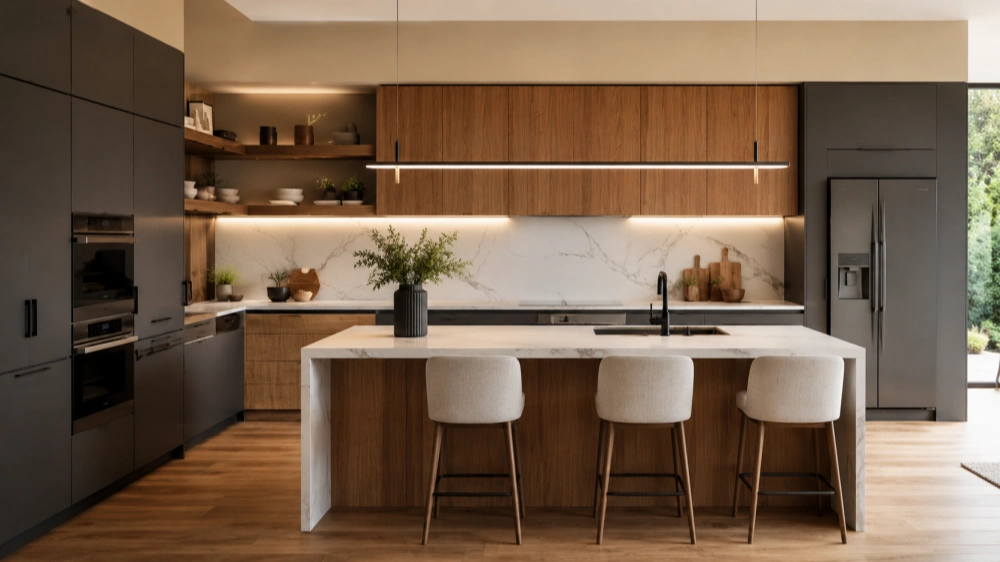
For buyers who want a more accurate cabinet budget, working with an experienced custom cabinet supplier can reduce design mistakes and improve project efficiency. Allure Kitchen Cabinet provides custom kitchen cabinet solutions based on your room size, storage needs, material preference, and project requirements.
Need a Custom Kitchen Cabinet Quote?
Send your kitchen size, layout, preferred style, and material requirements. Allure Kitchen Cabinet can help you create a practical cabinet solution with smart storage, modern finishes, and project delivery support.
Get a Custom Cabinet Quote1. Why Custom Kitchen Cabinet Cost Matters
Kitchen cabinets are not short-term furniture. They are fixed elements used every day for cooking, washing, food preparation, storage, and cleaning. A poorly planned cabinet system may create wasted corners, limited storage, difficult access, unstable drawers, and visible gaps after installation.
A well-planned custom kitchen cabinet system can improve how the entire kitchen works. It uses the available space more efficiently, keeps daily items easier to reach, and creates a cleaner visual result that matches the home interior.
- Better space use: Custom sizing reduces awkward gaps and makes full use of walls, corners, and vertical height.
- Improved cooking workflow: Cabinet zones can be planned around preparation, cooking, washing, and storage habits.
- Cleaner countertops: Hidden storage, pantry units, and appliance zones reduce daily clutter.
- More design consistency: Cabinet colour, finish, handle style, and layout can match the overall home design.
- Long-term value: Durable materials, reliable hardware, and accurate installation support long-term daily use.
2. What Is Included in the custom kitchen cabinet cost?
Before comparing prices, it is important to understand what is usually included in a custom kitchen cabinet quotation. A cabinet quote is not only about boards and doors. It may also include design planning, cabinet structure, door panels, hardware, internal accessories, surface finish, production, packing, delivery coordination, and installation support.
2.1 Cabinet Design and Layout Planning
Custom kitchen cabinets usually begin with layout planning. The design should match kitchen size, wall dimensions, ceiling height, appliance placement, sink position, cooking habits, storage needs, and preferred interior style.
A practical layout makes the kitchen easier to use every day. The washing area, preparation zone, cooking area, pantry storage, and appliance cabinets should work together instead of creating unnecessary movement.
2.2 Cabinet Body, Doors, Hardware, and Accessories
A typical custom cabinet quotation may include cabinet carcasses, door panels, drawers, hinges, drawer slides, handles, shelves, pull-out baskets, pantry units, corner systems, and drawer organisers.
These parts directly affect daily use. Strong cabinet bodies improve structural stability. Smooth drawer systems make cookware easier to access. Practical accessories help keep dishes, food, cleaning products, and small appliances organised.
2.3 Surface Finish and Decoration
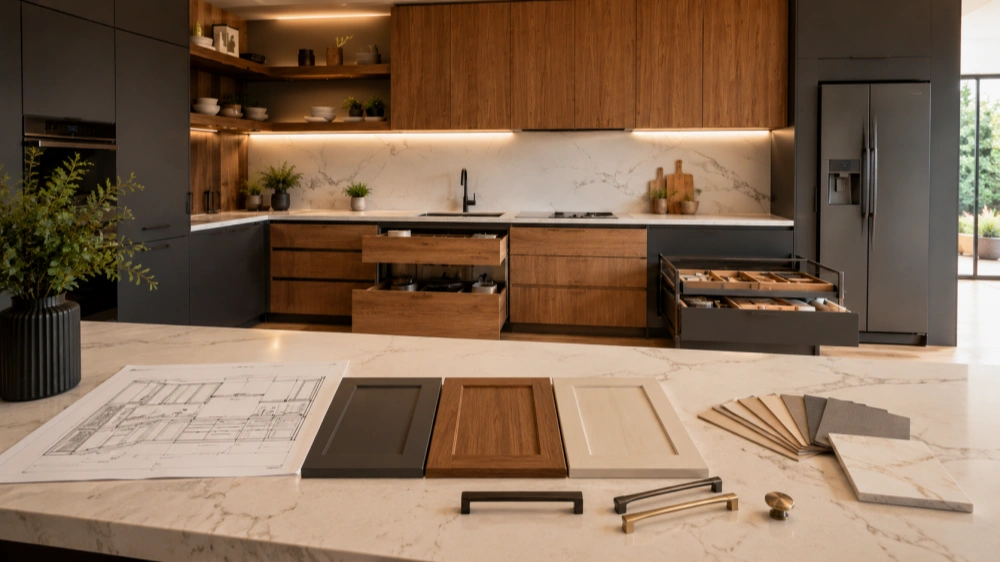
Cabinet finish affects both appearance and cost. Common options include matt, gloss, wood grain, lacquer, melamine, PET, veneer, textured panels, and special colour finishes.
Matt finishes creating a soft, modern look. Gloss finishes reflect light and can make compact kitchens feel brighter. Wood grain finishes add warmth and natural texture. Lacquer and premium decorative panels usually increase cost but create a more refined appearance.
2.4 Production, Packing, and Installation Support
For homeowners and project buyers, cabinet cost may also include production drawings, protective packing, cabinet labelling, delivery coordination, installation drawings, and installation support.
This matters because a custom cabinet project is not finished when production is complete. Accurate packing, clear installation guidance, and proper site coordination help create a clean built-in result.
3. Quick Cost Factor Overview
The table below gives a simple overview of the main factors that influence custom kitchen cabinet cost.
| Cost Factor | What It Affects | Buyer Value |
|---|---|---|
| Kitchen Size | Cabinet quantity, materials, hardware, production time | Helps estimate total project scale |
| Cabinet Layout | Design complexity, corner units, and island cabinets | Improves workflow and space use |
| Materials | Durability, environmental grade, structure, and appearance | Balances the budget, strength, and indoor comfort |
| Door Style and Finish | Visual effect, maintenance, production complexity | Creates the desired modern or luxury look |
| Hardware | Drawer smoothness, door alignment, and daily comfort | Improves long-term user experience |
| Storage Accessories | Organization, hidden storage, corner usage | Creates a cleaner and more efficient kitchen |
| Appliance Integration | Precision, ventilation, and installation coordination | Creates a more seamless kitchen system |
| Installation Support | Final fit, alignment, built-in result | Reduces gaps, errors, and project delays |
4. Factor 1: Kitchen Size and Cabinet Quantity
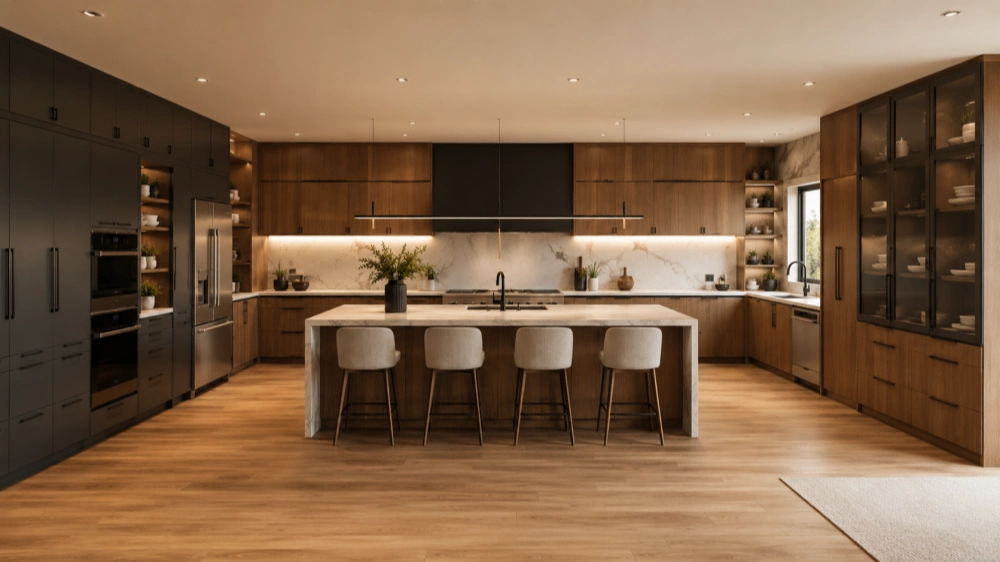
Kitchen size is one of the most direct factors affecting the cost of custom kitchen cabinets. A larger kitchen usually requires more cabinet units, more boards, more doors, more hardware, and more production time.
4.1 Larger Kitchens Require More Materials
The total cost is often influenced by cabinet length, wall cabinet quantity, base cabinet quantity, tall pantry units, island cabinets, decorative panels, and side panels.
A kitchen with full-height cabinets, multiple drawer units, an island, and integrated appliance cabinets will cost more than a simple straight-line kitchen. More cabinet units mean more material, more hardware, and more finishing work.
4.2 Small Kitchens Can Still Require Smart Custom Work
A small kitchen is not always low-cost. Some compact kitchens need special sizing, narrow pull-out units, corner storage, full-height cabinets, and built-in appliance zones.
These features help maximise every inch, but they may add design and production complexity. For small apartments, smart cabinet planning often matters more than simply reducing cabinet quantity.
4.3 How Kitchen Size Affects Buyers
The real value of custom kitchen cabinets is not only having more cabinets. It is about using the available space more intelligently.
Custom sizing can reduce wasted gaps, increase storage capacity, and create a cleaner layout. For developers and contractors, accurate cabinet quantity planning also helps control project budgets before production starts.
5. Factor 2: Cabinet Layout and Design Complexity
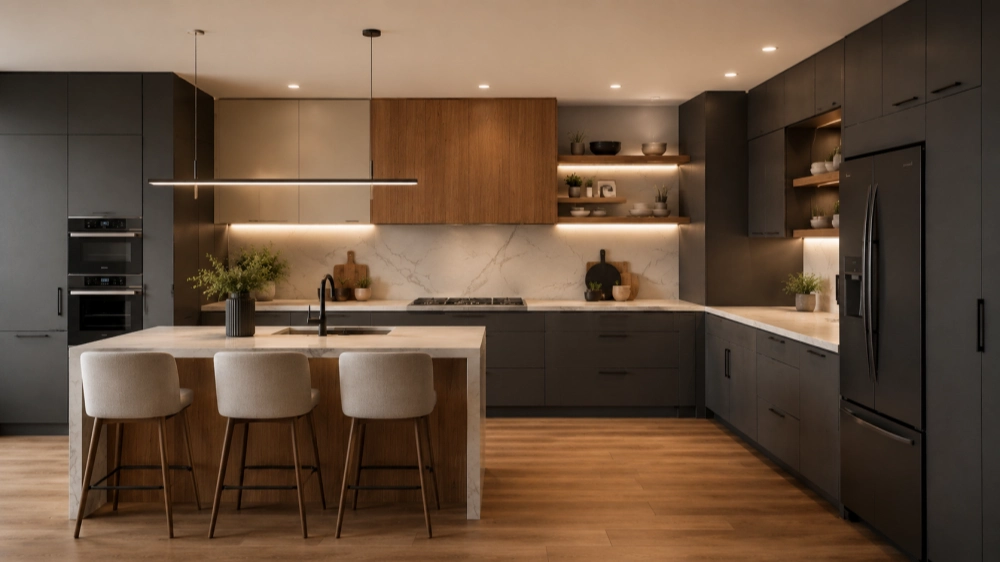
Cabinet layout has a major influence on cost. A simple layout is usually easier to design, produce, pack, and install. A more complex layout requires more detailed planning, more cabinet parts, and better installation coordination.
5.1 Straight-Line Kitchens
Straight-line kitchens are usually more cost-efficient. All cabinets are arranged along one wall, which makes design and installation relatively simple.
This layout is common in apartments, studios, rental units, and compact homes. It works well when the kitchen area is narrow but still needs practical storage and a clean, modern appearance.
5.2 L-Shaped and U-Shaped Kitchens
L-shaped and U-shaped kitchens provide more countertop area and storage capacity, but they also require more planning. Corner cabinets, sink positions, appliance zones, and wall cabinets must be coordinated carefully.
Corner storage may need pull-out systems or rotating baskets. These accessories can increase cost, but they also improve access and reduce wasted space.
5.3 Island Kitchens and Open Kitchens
Kitchen islands, breakfast bars, display cabinets, and open kitchen layouts often require more custom work. An island may include drawers, shelves, sink space, electrical planning, seating space, or decorative panels.
Open kitchens also require stronger visual consistency because they are often connected to the dining or living room. Cabinet colour, finish, handle design, and proportions need to match the whole interior style.
5.4 Why Design Complexity Matters
A more complex layout may cost more, but it can also create a better kitchen experience. A well-planned layout improves cooking workflow, storage access, countertop use, and visual balance.
6. Factor 3: Cabinet Material Selection
Material selection is one of the most important cost factors. Different cabinet materials offer different levels of strength, surface quality, moisture resistance, appearance, and environmental performance.
6.1 Plywood Kitchen Cabinets
Plywood is a strong and stable material often used for cabinet structures. It has good screw-holding ability and better structural strength compared with some lower-cost board options.
For kitchen cabinets, plywood is often chosen when buyers need durability, stability, and long-term reliability. It is especially suitable for cabinet carcasses, base cabinets, and areas that require stronger support.
6.2 MDF Kitchen Cabinets
MDF offers a smooth and even surface, making it suitable for painted, lacquered, or matte cabinet doors.
For modern kitchen designs, MDF is commonly used when a clean and refined door appearance is required. It works well for flat panel doors, shaker doors, and painted cabinet finishes.
6.3 Particle Board and Melamine Board
Particle board with melamine finish is a practical and cost-effective choice for many modern kitchen cabinet projects.
It provides a clean surface, multiple colour options, and good value for large-volume projects. For apartments, rental housing, and budget-conscious developments, melamine board can help control cost while maintaining a modern cabinet appearance.
6.4 Solid Wood Kitchen Cabinets
Solid wood creates a premium natural look and is often used in luxury, classic, or high-end residential kitchens.
It offers real wood texture and warmth, but it usually costs more than engineered boards. Solid wood may also require more care in kitchens with humidity changes.
6.5 E0 / E1 Eco-Friendly Board Options
For modern homes, environmental grade is an important consideration. E0 and E1 boards are commonly selected for projects where indoor comfort and long-term residential use matter.
Eco-friendly board options may increase material cost, but they strengthen buyer confidence. They are especially suitable for family homes, apartments, villas, hotels, and premium residential projects.
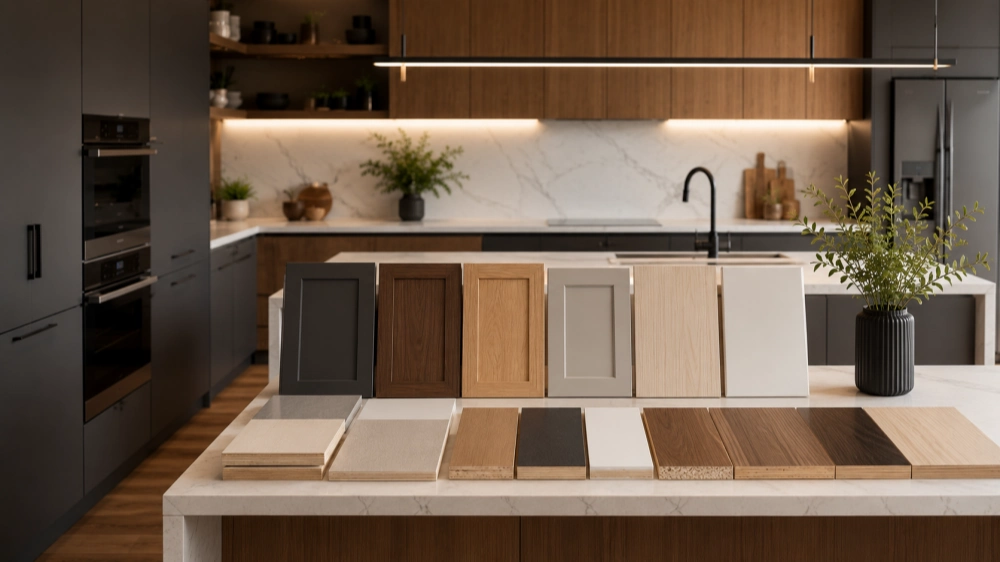
Not Sure Which Cabinet Material to Choose?
Allure Kitchen Cabinets can help you compare plywood, MDF, melamine, wood grain finishes, matte panels, and E0/E1 board options based on your budget, kitchen style, and long-term use.
Ask for Material Recommendations7. Factor 4: Door Style and Surface Finish
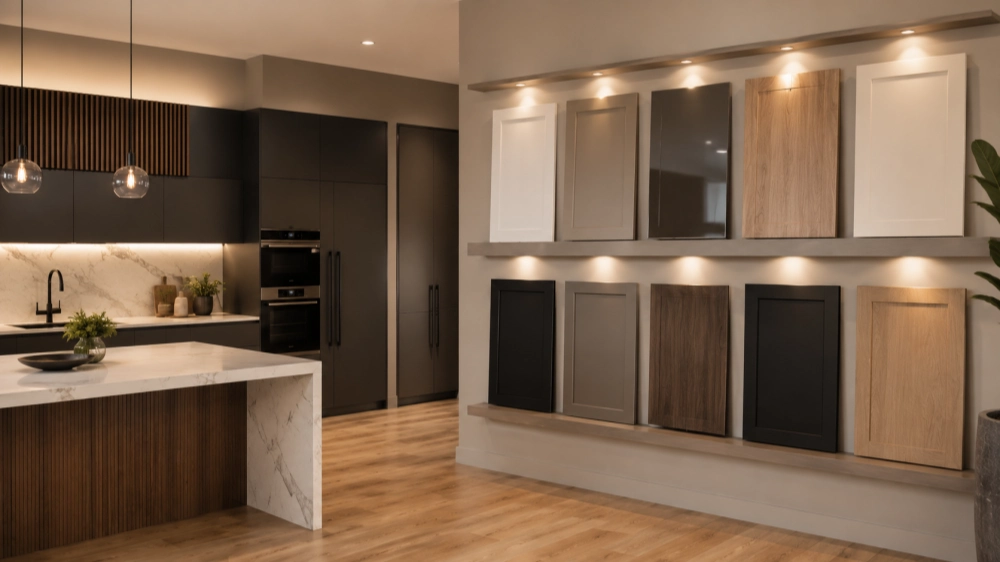
Cabinet doors are the most visible part of the kitchen. Door style and surface finish strongly affect both appearance and cost.
7.1 Flat Panel Doors
Flat-panel doors are widely used in modern and minimalist kitchens. They create a clean, simple, and elegant look without heavy decoration.
This style is usually more cost-efficient than complex decorative doors. It is also easy to match with apartments, modern homes, and open kitchen spaces.
7.2 Shaker-Style Doors
Shaker doors offer a classic yet modern appearance. They are commonly used in transitional kitchens, family homes, villas, and projects that need a softer decorative detail.
Compared with flat-panel doors, shaker doors may require more production work because of their framed design. However, they add depth without making the kitchen feel too heavy.
7.3 Handleless Cabinet Doors
Handleless cabinet doors create a seamless and premium look. They are popular in luxury kitchens, minimalist interiors, and open-plan homes.
Handleless designs may require aluminium profiles, groove systems, or push-open hardware. These additional components can increase cost but create a cleaner and more modern user experience.
7.4 Matte, Gloss, Wood Grain, and Lacquer Finishes
Different finishes create different visual effects and maintenance needs. Matte finishes feel calm and premium. Gloss finishes reflect light and can make compact kitchens feel brighter. Wood grain finishes add warmth and natural texture. Lacquer finishes create a refined appearance for higher-end projects.
8. Factor 5: Hardware Quality and Drawer Systems
Hardware is a small part of the kitchen visually, but it has a major impact on daily use. Hinges, drawer slides, handles, profiles, and soft-close systems affect comfort, durability, and long-term performance.
8.1 Hinges and Soft-Close Systems
Soft-close hinges allow cabinet doors to close smoothly and quietly. They reduce impact, protect door panels, and create a more comfortable daily experience.
Kitchen cabinet doors are opened and closed many times every day. Reliable hinges help maintain stable alignment and reduce noise over time.
8.2 Drawer Slides
Drawer slides are especially important because kitchen drawers often carry heavy items such as pots, pans, dishes, cutlery, and food containers.
Better drawer slides provide smoother movement, stronger weight support, and more stable daily use. Full-extension slides also make it easier to reach items stored at the back of the drawer.
8.3 Handles, Profiles, and Push-Open Systems
Handles and profiles influence both appearance and function. Traditional handles can add style and grip comfort. Aluminum profiles support a modern built-in look. Push-open systems are often used for handleless cabinet designs.
8.4 Why Hardware Should Not Be the Cheapest Part
Choosing the lowest-cost hardware may reduce the initial budget, but it can create problems later. Poor hinges may become loose, drawers may become unstable, and doors may lose alignment.
For a kitchen used every day, reliable hardware is worth the investment. It improves comfort, reduces maintenance issues, and supports longer cabinet life.
9. Factor 6: Internal Storage Accessories
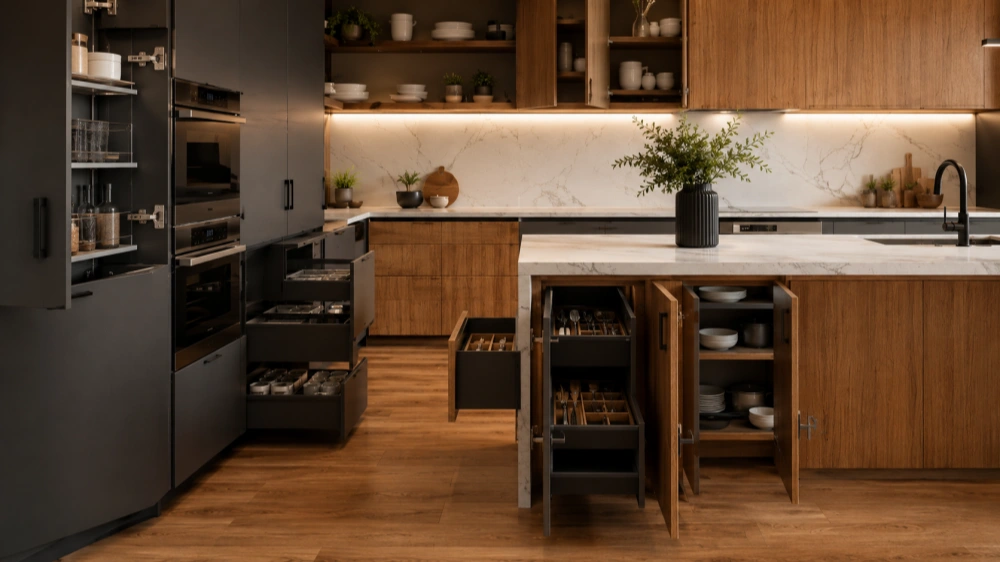
Internal storage accessories can increase the cost of custom kitchen cabinets, but they also make the kitchen easier to use and organise.
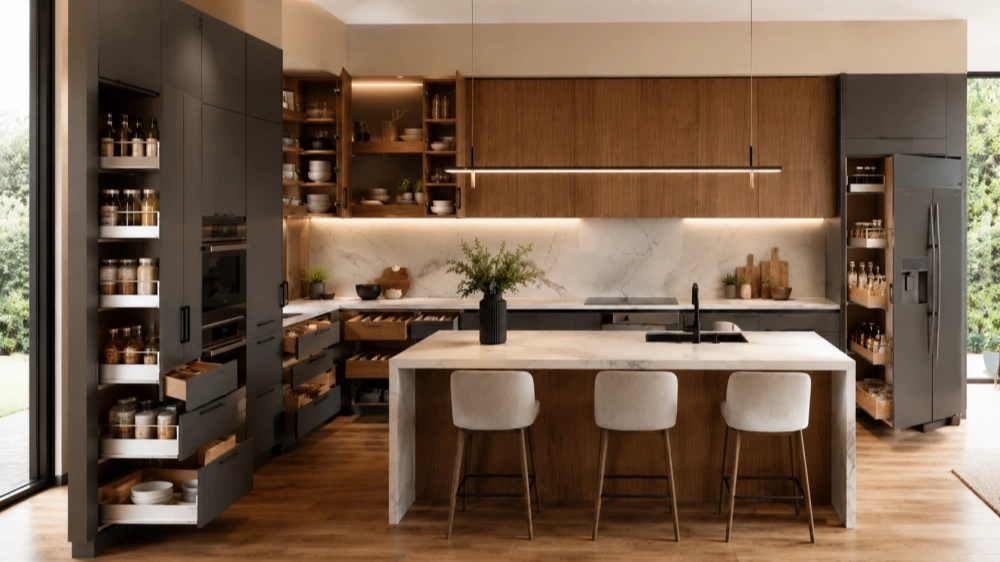
9.1 Pull-Out Baskets
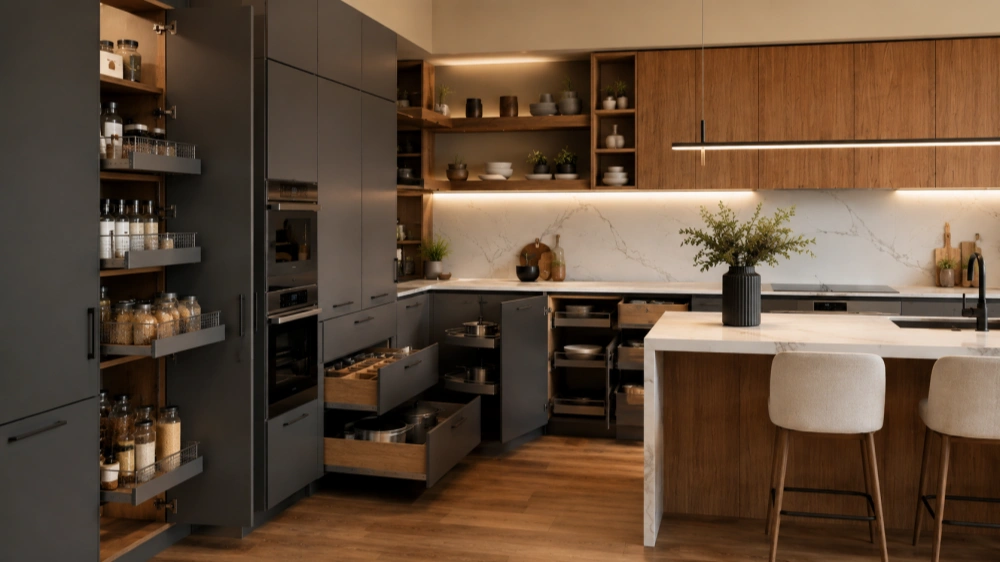
Pull-out baskets are useful for storing cookware, condiments, bottles, cleaning supplies, and dry food. They allow users to see and access items more easily instead of searching deep inside a cabinet.
9.2 Corner Storage Systems
Corner areas are often difficult to use in L-shaped and U-shaped kitchens. Without proper design, these areas can become wasted storage.
Corner pull-out systems, rotating baskets, and blind corner solutions help make these spaces more accessible. They increase usable storage and reduce hidden clutter.
9.3 Tall Pantry Units
Tall pantry cabinets use vertical space to store dry food, bottles, small appliances, snacks, and household supplies.
For small kitchens, a tall pantry can improve storage without taking up too much floor area. For large kitchens, it creates a more organised food storage zone.
9.4 Drawer Dividers and Cutlery Trays
Drawer dividers and cutlery trays keep knives, forks, spoons, cooking tools, and small accessories in fixed positions. This reduces mess and makes the kitchen easier to maintain.
9.5 Hidden Storage and Appliance Zones
Custom cabinets can create hidden storage for small appliances such as coffee machines, rice cookers, mixers, and toasters.
Instead of leaving appliances on the countertop, hidden appliance zones keep the kitchen cleaner and more visually organised.
Want Better Kitchen Storage?
If your kitchen has limited storage, wasted corners, or a cluttered countertop, Allure Kitchen Cabinet can design pull-out baskets, tall pantry units, drawer dividers, hidden appliance zones, and corner storage systems for your space.
Customize Your Kitchen Storage10. Factor 7: Countertop, Sink, and Appliance Integration
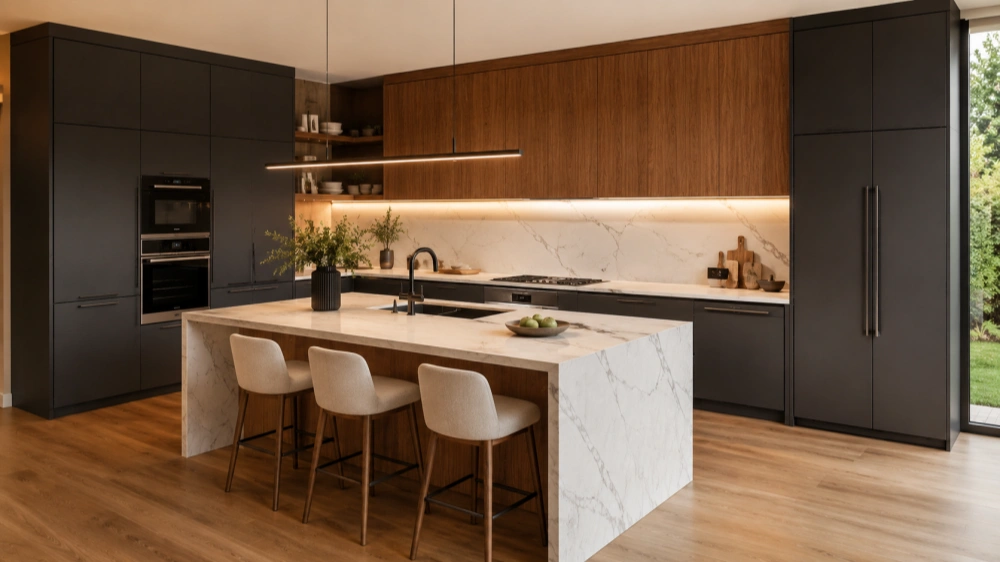
Custom kitchen cabinets often need to coordinate with countertops, sinks, and built-in appliances. This integration affects design complexity, production accuracy, and final cost.
10.1 Built-In Appliance Cabinets
Modern kitchens often include built-in ovens, microwaves, dishwashers, refrigerators, range hoods, and wine coolers.
Each appliance needs accurate dimensions and proper cabinet planning. Incorrect sizing can cause installation problems, visible gaps, poor ventilation, or an unbalanced kitchen layout.
10.2 Sink Cabinet and Plumbing Area
The sink cabinet requires special attention because it must allow space for pipes, drainage, water filters, cleaning supplies, and sometimes waste sorting systems.
Moisture-resistant design is important in this area. Proper planning can reduce water-related problems and make cleaning supplies easier to organise.
10.3 Countertop Material Coordination
Countertops may not always be included in the cabinet quotation, but they affect the total kitchen budget. Common options include quartz, sintered stone, solid surface, marble-look materials, and stainless steel for commercial-style kitchens.
Cabinets and countertops must be planned together to ensure proper support, edge details, alignment, and visual consistency.
10.4 Why Integration Affects Cost
The more built-in elements a kitchen has, the more accurate the design and production need to be. Good integration reduces installation problems and creates a cleaner final appearance.
11. Factor 8: Measurement, Delivery, and Installation
Measurement, delivery, and installation are often underestimated, but they strongly affect the final result of a custom kitchen cabinet project.
11.1 On-Site Measurement
Accurate measurement is essential for custom cabinets. Wall length, ceiling height, floor level, pipe position, electrical points, window location, and appliance dimensions should be checked carefully.
Good measurement helps avoid gaps, misalignment, and installation delays. It ensures that cabinets fit the real kitchen space, not just the drawing.
11.2 Pre-Assembled vs Flat-Pack Cabinets
Custom kitchen cabinets can be supplied as pre-assembled cabinets or flat-pack cabinets.
- Pre-assembled cabinets: Faster on-site installation and stronger structure, but higher shipping volume.
- Flat-pack cabinets: Lower shipping volume and easier export packing, but they require accurate assembly and careful installation.
11.3 Professional Installation
Installation quality directly affects how the kitchen looks and works. Even well-made cabinets can look poor if they are not installed properly.
Professional installation helps ensure door alignment, drawer smoothness, countertop support, wall fitting, and clean finishing details.
11.4 Turnkey Kitchen Cabinet Solution
A turnkey solution may include design planning, material selection, production, packing, delivery coordination, installation drawings, and installation support.
For homeowners, this reduces the stress of managing different suppliers. For developers, contractors, and designers, turnkey support improves project control and helps keep the final result consistent.
Start Your Cabinet Project With Less Guesswork
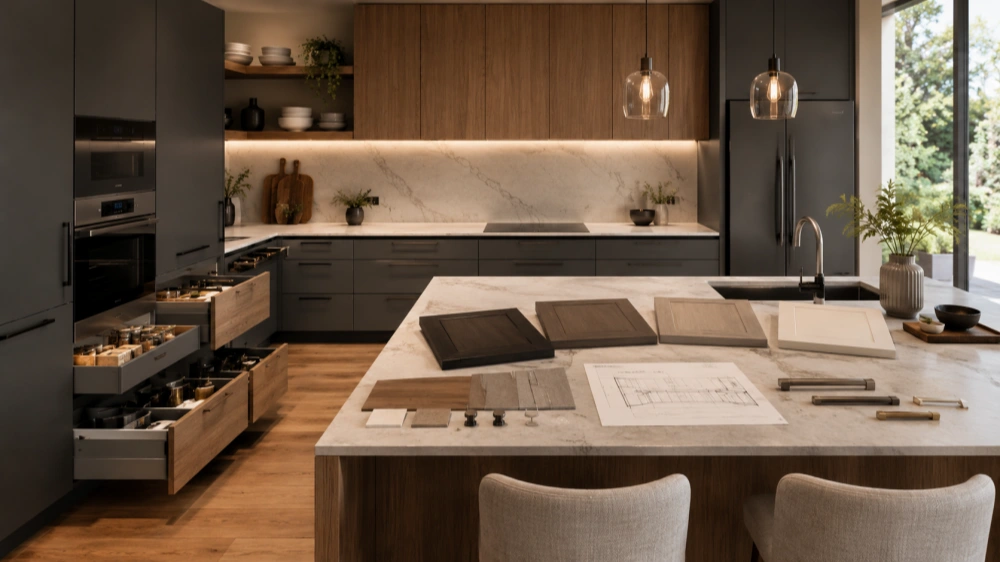
A beautiful cabinet design only works when measurement, production, packing, and installation are properly managed. Allure Kitchen Cabinet supports custom cabinet projects from layout planning to production and delivery coordination.
Start Your Cabinet Project12. Optional Features That May Increase the Budget
Some features are not required for every kitchen, but they can improve comfort, appearance, and storage value.
12.1 LED Lighting
LED lighting can be added under wall cabinets, inside glass cabinets, under shelves, or inside tall pantry units. It improves visibility while cooking and creates a warmer kitchen atmosphere.
12.2 Glass Doors and Display Cabinets
Glass cabinet doors and display cabinets make the kitchen feel lighter and more decorative. They are often used for wine glasses, tableware, collectibles, and open kitchen display areas.
12.3 Custom Colours
Standard colours are usually more cost-efficient. Custom colours, special colour matching, or low-volume finishes may increase cost, but they can help match the kitchen with the full interior concept.
12.4 Curved Cabinets or Special Shapes
Curved cabinets, angled cabinets, and other non-standard shapes require more complex production. They can create a unique design but usually need more design time and higher production accuracy.
12.5 Moisture-Resistant or Fire-Resistant Materials
In some climates or project standards, moisture-resistant or fire-resistant materials may be needed. These options can increase the budget but improve safety, durability, and long-term performance.
13. How to Control Custom Kitchen Cabinet Cost Without Reducing Value
A good budget does not mean choosing the cheapest option. The goal is to spend money where it creates the most long-term value.
13.1 Prioritize the Most Used Areas
Focus the budget on areas used every day, such as base cabinets, drawers, sink cabinets, cooking zones, and pantry storage. These areas affect daily comfort the most.
13.2 Choose Practical Materials
Not every part of the kitchen needs the most expensive material. A smart design can combine different materials based on function, budget, and expected use.
13.3 Use Smart Storage Where It Matters Most
Storage accessories are helpful, but adding too many can increase the budget quickly. Use smart storage in high-value areas such as corners, pantry units, deep drawers, and narrow spaces.
13.4 Keep the Design Clean
A clean, modern design can look premium without excessive decoration. Flat panel doors, simple lines, practical finishes, and well-planned proportions can create a stylish kitchen while keeping production more efficient.
13.5 Work With an Experienced Manufacturer
An experienced custom kitchen cabinet manufacturer can help balance design, materials, function, and cost before production starts. This reduces the risk of wrong measurements, unsuitable materials, poor storage planning, and installation problems.

14. Custom Kitchen Cabinet Cost for Different Buyer Types
Different buyers have different priorities. Understanding your project type helps you choose the right cabinet solution and budget level.
14.1 Apartment Owners
Apartment owners often face limited kitchen space, narrow layouts, and insufficient storage. Custom kitchen cabinets can use full wall height, slim spaces, corners, and appliance zones to increase storage without making the kitchen feel crowded.
14.2 Villa Owners
Villa owners usually care more about design consistency, premium appearance, and long-term comfort. Custom kitchen cabinets can coordinate with island design, tall units, appliance cabinets, door finishes, and storage systems with the whole home style.
14.3 Real Estate Developers
Developers often need consistent quality, controlled cost, and efficient project delivery across multiple units. Project-based custom cabinets support standardised production, consistent finishes, and organised installation planning.
14.4 Interior Designers
Interior designers need cabinet solutions that match exact design concepts, room dimensions, and material plans. Custom manufacturing supports special sizes, colour matching, door styles, surface finishes, and hardware choices.
14.5 Contractors and Builders
Contractors and builders care about accurate production, installation efficiency, and project handover. Custom cabinets with drawings, labelling, clear packing, and installation guidance help reduce site problems and delays.
15. Questions to Ask Before Requesting a Cabinet Quote
A clear quotation starts with clear project information. Before requesting a custom kitchen cabinet quote, prepare the following details.
15.1 What Is the Total Kitchen Size?
Cabinet length, wall height, ceiling height, and layout type all affect cost. Photos, floor plans, or rough measurements can help the manufacturer understand the project faster.
15.2 What Materials Do You Prefer?
Decide whether you need plywood, MDF, melamine board, solid wood, E0/E1 board, or moisture-resistant board. If you are not sure, a professional supplier can recommend options based on budget, style, climate, and project use.
15.3 What Cabinet Style Do You Want?
Common styles include modern, luxury, minimalist, shaker, handleless, matte, gloss, and wood grain designs. A clear style helps control material selection, finish choice, hardware type, and production complexity.
15.4 Do You Need Appliances Built In?
Built-in ovens, dishwashers, refrigerators, microwaves, range hoods, sinks, and cooktops should be confirmed early. Accurate appliance information helps avoid installation problems.
15.5 Do You Need Installation Support?
Some buyers only need production and delivery. Others need installation drawings, video guidance, local installation coordination, or turnkey project support. Clarifying this early helps make the quotation more accurate.

16. Why Work with Allure Kitchen Cabinet?
Allure Kitchen Cabinet provides custom kitchen cabinet solutions for modern homes, apartments, villas, contractors, designers, and residential projects. Our focus is not only cabinet production but also space optimisation, practical storage, modern design, durable materials, and project delivery support.
16.1 Custom Kitchen Cabinet Solutions
We support compact kitchens, open-plan kitchens, island kitchens, apartment kitchens, villa kitchens, residential projects, and whole-house cabinetry solutions. Each cabinet plan can be adjusted according to real space size, storage needs, appliance layout, and preferred style.
16.2 Material and Finish Options
We offer practical material and finish options based on project requirements, including plywood, MDF, melamine, matte finishes, gloss finishes, wood grain finishes, textured finishes, E0/E1 board options, and modern cabinet door styles.
16.3 Project Support
For homeowners, builders, contractors, and design companies, Allure Kitchen Cabinet can support design communication, custom production, quality inspection, secure packing, delivery coordination, installation guidance, and turnkey cabinet project planning.
Get a Cost-Effective Custom Kitchen Cabinet Solution
Controlling custom kitchen cabinet cost does not mean choosing the cheapest materials. The better approach is to create a cabinet plan that matches your space, budget, daily cooking habits, and long-term use.
Request a Custom Cabinet Quote17. FAQ About Custom Kitchen Cabinet Cost
Q1: How much do custom kitchen cabinets cost?
Custom kitchen cabinet cost depends on kitchen size, cabinet layout, materials, door finish, hardware, storage accessories, countertop integration, and installation requirements. A detailed quotation should be based on measurements, drawings, material choices, and project needs.
Q2: Are custom kitchen cabinets more expensive than standard cabinets?
Custom kitchen cabinets usually cost more than standard cabinets, but they provide better space fit, more flexible storage, stronger design consistency, and a cleaner built-in result. For long-term use, they can offer better value because they are designed around the real kitchen space.
Q3: What material is best for custom kitchen cabinets?
Plywood is often preferred for strong cabinet structures; MDF is suitable for smooth painted or lacquered doors, and melamine board is a practical, cost-effective option. For family homes and premium projects, E0/E1 eco-friendly boards are recommended for better indoor comfort.
Q4: Can custom kitchen cabinets help save space?
Yes. Custom kitchen cabinets can use full wall height, corner areas, narrow gaps, tall pantry units, and hidden storage zones. This improves storage capacity without making the kitchen feel crowded, especially in apartments and compact kitchens.
Q5: Do you provide design and installation support?
Allure Kitchen Cabinet supports layout discussion, material selection, custom production, packing, delivery coordination, installation drawings, and project support depending on the buyer’s requirements.
Q6: Why choose Allure Kitchen Cabinet for custom kitchen cabinets?
Allure Kitchen Cabinet helps homeowners, designers, contractors, and project buyers create custom kitchen cabinet solutions based on real space size, storage needs, material preferences, and project requirements. We support modern cabinet design, E0/E1 board options, smart storage systems, durable hardware, and project delivery support.
Conclusion
The cost of custom kitchen cabinets is not only determined by cabinet size or material. It is shaped by the complete kitchen solution, including layout design, storage planning, surface finish, hardware quality, appliance integration, measurement, delivery, and installation.
A well-planned custom kitchen cabinet system can improve cooking workflow, increase storage efficiency, create a cleaner countertop, and enhance the overall value of the home.
For homeowners, designers, contractors, and developers, working with an experienced custom kitchen cabinet manufacturer helps control budget while achieving a more practical, durable, and premium kitchen space.
If you are planning a new kitchen or project cabinet order, Allure Kitchen Cabinet can help you create a custom cabinet solution designed around your space, budget, storage needs, and long-term use.
Ready to Start Your Kitchen Cabinet Project?
Send your kitchen layout, preferred style, material requirements, and project details. Allure Kitchen Cabinet can help you plan a tailored cabinet solution with practical storage, durable materials, and a clean, modern design.
Get Free Design Support