 EN
EN


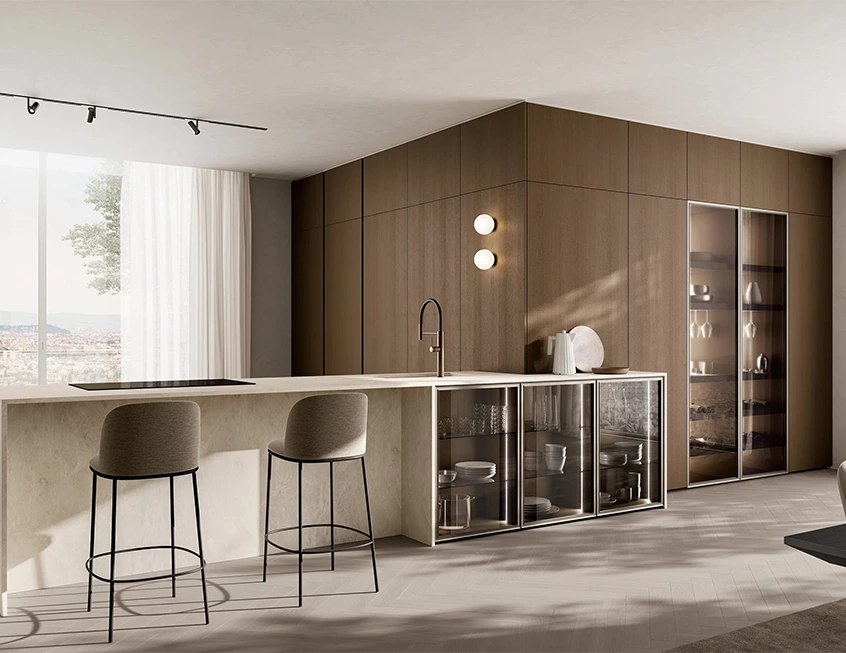
Real Melbourne Villa Renovation Case Of Unqualified Coating Surface Failure
Our full-house custom design team has delivered hundreds of residential kitchen projects across Brisbane, Sydney, Melbourne and Adelaide following our five-step custom workflow over the past eight years, and we have witnessed many post-installation surface damage troubles caused by inferior coating layers on cheap custom kitchen cabinets. A luxury villa customer in Melbourne contacted us to replace old cabinetry three years ago. The previous local supplier produced custom kitchen cabinets with low-cost single-layer lacquer coating without wear-resistant primer treatment. Within just ten months of daily cooking use, visible scratches appeared on cabinet doors from metal pot handles and cleaning sponges; oil splatters from frying penetrated the thin coating and left permanent yellow stains that could not be wiped off, and partial coating peeled off around sink edges under long-term steam erosion. The homeowner spent over 14,200 Australian dollars on cabinet removal, waste disposal and full re-customization, plus lost rental income during renovation downtime. When we remade their custom kitchen cabinets, we adopted our factory’s standard multi-layer wear-resistant composite coating process matched with E0 grade substrate, including anti-scratch primer, intermediate isolation layer and food-grade top finishing coat. After two years of continuous daily use, the cabinet surface still maintains complete uniform texture without obvious scratches, oil stains or peeling. This real renovation case fully proves that qualified wear-resistant coating acts as a permanent protective barrier for custom kitchen cabinets, while cutting corners on coating procedures leads to expensive long-term renovation losses. All wear-resistant coating materials we apply pass Australian AS 4386 cabinet surface testing standards and low-VOC environmental requirements suitable for local family living spaces.
Professional Structural Analysis Of How Wear-Resistant Coating Guards Custom Kitchen Cabinets
Most residential clients only judge custom kitchen cabinets by surface gloss and color, lacking professional understanding of how multi-layer wear-resistant coating blocks kitchen’s three major damaging factors: mechanical scratch, oil chemical corrosion and high-humidity steam erosion. Ordinary single-layer paint film forms a thin fragile surface without isolation buffer, so hard kitchen utensils will leave permanent indentations with slight friction; our factory’s wear-resistant coating system for custom kitchen cabinets adopts three-stage laminated film forming technology, forming a dense cross-linked molecular network after high-temperature curing. Independent lab test data under Australian furniture standard AS 4386 shows our finished coating reaches 3H pencil hardness under 1kg load, which means daily metal tableware and cleaning tools cannot leave deep irreversible scratches. In terms of oil resistance, the compact film structure of wear-resistant coating reduces surface oil contact angle above 65 degrees; grease splatters only stay on the outer coating surface instead of penetrating into substrate fiber gaps, and can be erased completely with neutral detergent cloth without residual discoloration. For humid kitchen zones beside cookers and sinks, the continuous wear-resistant coating film cuts off steam penetration channels, preventing plywood or MDF substrate from absorbing moisture and swelling, which is a common defect of cabinets without complete wear-resistant coating. Our technical team sorts out contrast test records of coated and uncoated custom kitchen cabinets after 12 months of simulated kitchen environment circulation, clearly showing that unprotected panels suffer 7 times higher surface damage probability than boards covered with full wear-resistant coating.
Classified Wear-Resistant Coating Matching For Different Style Custom Kitchen Cabinets
As a full-house custom manufacturer supporting cross-border Australian and European residential projects, we develop three differentiated wear-resistant coating formulas to match diverse texture demands of custom kitchen cabinets, covering matte, semi-gloss and high-gloss cabinet door styles without sacrificing wear protection performance. For minimalist matte walnut and timber veneer custom kitchen cabinets popular in European residential markets, we adopt water-based polyurethane wear-resistant coating with low-gloss flat finish; the formula retains natural wood grain texture while adding anti-abrasion additives inside the film, resisting frequent wiping friction without losing matte soft visual effect. For medium-budget neutral tone melamine custom kitchen cabinets widely used in Australian family apartments, we use modified melamine wear-resistant overlay coating, integrating scratch resistance and anti-fouling functions into one single production process, shortening manufacturing cycle while meeting daily heavy-use standards. For luxury high-gloss custom kitchen cabinets favored by Sydney and Melbourne villa clients, we apply automotive-grade two-component conversion wear-resistant varnish, which forms mirror-smooth surface and passes 10,000 times reciprocating cleaning cloth friction test without tiny scratch marks. Every wear-resistant coating batch used on custom kitchen cabinets completes pre-production adhesion testing on corresponding substrate materials, avoiding coating peeling caused by mismatched paint and board texture. Before design confirmation, we provide physical coating sample panels for clients to compare scratch, oil-wiping and damp resistance effects visually, realizing fully transparent surface treatment technology without hidden production processes.
Authoritative Australian Furniture Standard Expert Interpretation On Coating Necessity
Ms. Joanna Reed, senior surface material testing expert of Australian Furniture Standards Research Institute with 31 years of cabinet performance research experience, released a 2026 residential cabinet surface protection research report focusing on wear-resistant coating’s core value for custom kitchen cabinets. She pointed out that kitchen space belongs to composite harsh environment with alternating high temperature, humidity, grease and mechanical friction, so any unprotected substrate material will degrade rapidly within 1–2 years of normal household cooking frequency. Her long-term tracking data covering more than 500 Australian residential kitchen projects records that custom kitchen cabinets equipped with standardized multi-layer wear-resistant coating maintain over 90% original surface integrity after five years of continuous use, while cabinets with cheap thin single paint coating lose more than 60% surface aesthetics within two years due to scratch, stain and steam damage. Reed specially reminded overseas custom buyers that many small suppliers reduce production cost by omitting primer and intermediate wear-resistant layers; such simplified coating cannot meet AS 4386 mandatory surface durability clauses, and finished custom kitchen cabinets may fail local household product inspection. All wear-resistant coating process standards of our custom kitchen cabinets fully follow the protective performance indicators proposed in her authoritative research report, and we attach complete coating test reports together with cabinet quotation files for every client’s reference before order confirmation.
Complete Quality Control System To Guarantee Stable Wear-Resistant Coating Effect
Only adopting qualified wear-resistant coating raw materials cannot guarantee uniform protective performance on all custom kitchen cabinets; our five-step full-cycle production inspection system locks every coating construction link to avoid incomplete film forming or uneven spraying defects. The first inspection link is raw material incoming testing: every batch of wear-resistant coating liquid receives scratch hardness, VOC emission and oil resistance sampling test before entering the workshop, unqualified paint will be returned to suppliers and prohibited from being applied on custom kitchen cabinets. The second link controls substrate pre-treatment: workers polish and seal board edges uniformly before spraying wear-resistant coating, eliminating rough fiber burrs that cause coating local detachment. The third real-time monitoring stage tracks workshop temperature and humidity during spraying and high-temperature curing, as unstable environment will form loose thin coating film with weak wear resistance. The fourth offline finished product inspection uses standard 3H pencil and oil simulation reagent to randomly sample custom kitchen cabinet door panels, recording scratch and stain resistance data into production archives for traceability. The fifth pre-delivery recheck cleans cabinet surfaces and conducts full visual inspection for coating peeling, sag or uneven gloss. For overseas remote clients unable to visit the factory, our multilingual technical team provides real-time video viewing of wear-resistant coating spraying and curing procedures at any production stage. After installation, we supply matched touch-up wear-resistant paint for minor surface abrasion repair, extending the long-term service life of custom kitchen cabinets’ complete protective coating layer.
Table of Contents
- Real Melbourne Villa Renovation Case Of Unqualified Coating Surface Failure
- Professional Structural Analysis Of How Wear-Resistant Coating Guards Custom Kitchen Cabinets
- Classified Wear-Resistant Coating Matching For Different Style Custom Kitchen Cabinets
- Authoritative Australian Furniture Standard Expert Interpretation On Coating Necessity
- Complete Quality Control System To Guarantee Stable Wear-Resistant Coating Effect